

Ebservant is reader-supported: some links on this page are affiliate links, and as an Amazon Associate Ebservant earns from qualifying purchases at no extra cost to you. Learn more.
Seat width for home theater seating is the horizontal distance between the interior sides of the armrests. You determine the correct width based on your personal shoulder breadth and the amount of elbow room you require for comfort during long periods of use.
If you prefer a high-end aesthetic, explore top-tier luxury leather theater seats to see which premium models offer the best durability.
Which Seat Width Suits Your Situation?
| If this is you | The Seat Width that suits you | Why |
|---|---|---|
| You have a smaller frame or prefer a compact, snug feel. | 20 in to 23 in | Narrower widths allow for a more intimate feel and a smaller footprint in tight rooms. |
| You are of average build and want standard comfort. | 24 in to 27 in | This range provides a balance of personal space and manageable dimensions for most households. |
| You have a broad build or prefer significant elbow room. | 28 in to 32 in | Wider interiors prevent the armrests from pressing against your shoulders or hips. |
| You require extra space for large items or frequent movement. | 33 in and above | Extra-wide seating provides maximum clearance for unrestricted movement and larger body types. |
Home Theater Seats we have reviewed in detail
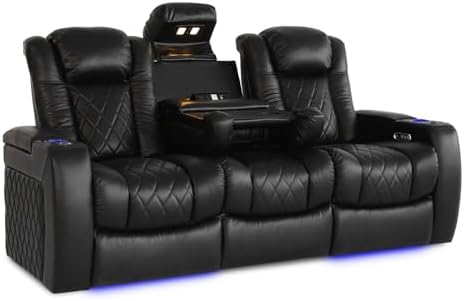
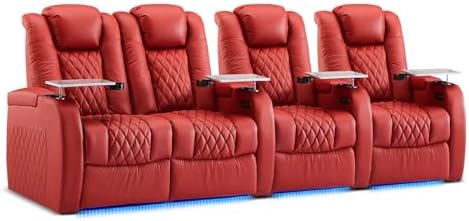
3 options shown here, $859.99 to $2999, each with its own full review behind its name.
Competitive players should browse our guide to gaming-optimized home theater seating for extra support during long sessions.
For a spa-like experience, see our comparison of power recliners with massage and heat to find your perfect match.

How Do I Measure My Required Seat Width?
Measuring your required seat width involves determining the space your body occupies while seated in a relaxed position. Start by sitting in a chair that currently feels comfortable and measure the distance between the inner edges of the armrests. This measurement represents the interior seating area. If you do not currently own a chair that feels correct, you must measure your own shoulder width. Stand against a wall with your arms slightly out from your sides and measure from the outer edge of one shoulder to the other. Add 2 to 4 inches to this shoulder measurement to account for the space needed to sit without feeling cramped.
If your layout is tight, look at compact and space-saving theater seating to maximize your available room area.
Travelers can find the most versatile theater seating for RVs designed to withstand movement and fit small interiors.
Checking manufacturer specifications for internal seat width dimensions
You should check the manufacturer’s specifications to ensure the internal dimensions match your needs. Look for “seat width,” “interior width,” or “seating area width” in the technical specifications. Do not rely on the “total width” or “exterior width,” as these figures include the thickness of the armrests and the base. A chair with a 30 in total width might only have a 24 in seat width. Confirming the internal clearance ensures you do not order a chair that feels too narrow once it arrives in your home theater.
Modern setups can stay powered by browsing the best theater seats with built-in USB charging for easy device access.
For those who enjoy snacks or snacks while watching, view the best home theater seating with tray table features.
Adding 3 inches of clearance beyond shoulder width for movement
How much extra space do I actually need? Most users find that adding 3 inches of clearance beyond their actual shoulder width provides the necessary room to shift positions. This prevents the armrests from becoming a physical boundary during a movie. If you are unsure of your measurements, find a piece of tape and mark the width of a chair you already enjoy using.
Beyond width, you should also consider how to choose the right recline angle for maximum comfort.
It is also important to understand how to measure total depth to ensure the chair fits in your space.
What Happens if the Seat Width is Too Small or Too Large?
A seat width that is too small results in physical restriction and discomfort. If the interior width is less than your shoulder breadth, the armrests will press against your sides. This pressure can lead to restricted circulation or a feeling of being “squeezed” into the chair. In a home theater setting, this often causes the user to shift constantly to find a comfortable position, which distracts from the viewing experience. It also makes it difficult to reach for items like snacks or drinks without moving your entire torso.
Safety and comfort are key, so check required weight capacity for theater seats before making a final purchase.
Problems caused by choosing a home theater seat width that is too large
Choosing a seat width that is too large can create a different set of issues. While it provides plenty of space, a seat that is significantly wider than necessary can feel cavernous. If the gap between the armrests is too large, the user may feel as though they are “sinking” into the middle of the chair rather than being supported by it. This can lead to a lack of lateral stability, where the person feels less secure in the seat. In a room with limited floor space, an oversized seat width also reduces the number of chairs you can fit in a row or a cluster.
Beginners can start by viewing our basic home theater seat explanation to understand the core components of these chairs.
To clarify technical jargon, look at our plain English seating specs guide for a simpler breakdown of features.
How Oversized Width Affects Room Layout
The total footprint of the chair is dictated by the seat width plus the thickness of the armrests. A seat width that is 4 inches wider than necessary can add 8 to 10 inches to the total width of the chair. In a home theater where every inch of floor space counts, this extra width can prevent you from aligning the chairs correctly with your screen or sound system. It can also create awkward gaps between seats that make the room look cluttered rather than organized.
Understanding your options is easier when you see the different types of theater seats available on the market today.
Protect your investment by reviewing how to check theater seat warranties before you finalize your order.
What Should I Do if I Fall Between Two Seat Widths?
Deciding between two seat widths often comes down to the priority of comfort versus room capacity. If your measurements place you exactly between two standard sizes, such as 26 in and 28 in, you must choose based on your primary goal. If your priority is a sense of spaciousness and you have the floor space available, the larger width is the safer choice. It is much easier to have a little extra room than to have a chair that feels too tight.
If a traditional chair isn’t right, explore alternative ways to achieve theater seating for different room configurations.
For a deep dive into a specific model, see our full WLD-SF-LUXURY Chair review for detailed specifications.
Balancing seat width for comfort against room layout requirements
However, if you are trying to fit a specific number of chairs into a set amount of space, you should lean toward the smaller width. A slightly narrower seat is often imperceptible to the average user if it still provides at least 2 inches of clearance beyond the shoulders. You must weigh the physical sensation of the seat against the logistical requirements of your room layout. If you are unsure, the larger width is the standard recommendation for home theater seating to ensure long-term comfort.
Travelers can view our full SAMERY RV Loveseat review to see how it performs in a mobile environment.
Experience extra comfort by reading our full URRED Power Loveseat review for a breakdown of its massage features.
The Importance of Checking Return Policies for Sizing
Because seat width is a subjective measurement of comfort, verifying the return policy before ordering is a practical step. Many manufacturers specify that items cannot be returned if the customer simply finds the size “not as expected.” Knowing the specific return window and the conditions for shipping a large item back can help you feel more confident in your measurement. If you are between sizes, knowing the return path provides a safety net for your decision.
For a closer look at a high-quality sofa, see our full Weilianda Leather Loveseat review to view the spec details.