

Ebservant is reader-supported: some links on this page are affiliate links, and as an Amazon Associate Ebservant earns from qualifying purchases at no extra cost to you. Learn more.
Our Top 3 Self-powered Speakers
The best studio monitors for music production is the JBL Professional 305P MkII which provides 82 watts of power output to suit producers seeking a balanced, professional-grade near-field experience.
Most Powered Speaker System options look identical on a listing page. These 3 are the ones that differ where it actually matters.

#1 – JBL Professional 305P MkII
Best for: music production requiring a 5-inch driver and 82 watts of power.
Why the JBL Professional 305P MkII is our #1 pick
- Listed at $269 in November 2026 – premium among those compared; the price moves, so check it
- 4.6 rating from 4,308 ratings
Power Output: 82 watts · Driver Diameter: 5 Inches
Against the other picks on power output, pick #2 states High Frequency 250W / Low Frequency 250W and pick #3 states 26 W + 26 W.

#2 – JBL Professional 705P
Best for: studio work requiring low-end frequency reproduction below 60Hz.
Why the JBL Professional 705P is our #2 pick
- Listed at $319 in November 2026 – premium among those compared; the price moves, so check it
- 4.6 rating from 4,308 ratings
Power Output: High Frequency 250W / Low Frequency 250W · Driver Diameter: 5 Inches
To put that power output in context, pick #1 states 82 watts and pick #3 states 26 W + 26 W.
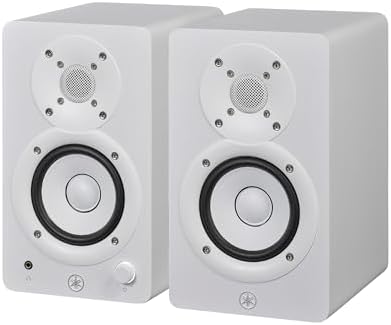
#3 – Yamaha HS3 Powered Studio Monitor White
Best for: desktop setups where space is limited to a 3.5-inch driver size.
Why the Yamaha HS3 Powered Studio Monitor White is our #3 pick
- Listed at $388.99 in November 2026 – premium among those compared; the price moves, so check it
- 4.7 rating from 2,273 ratings
Power Output: 26 W + 26 W · Driver Diameter: 3.5″
For comparison on power output, pick #1 states 82 watts and pick #2 states High Frequency 250W / Low Frequency 250W.
If you need audio for a social event, see the best bluetooth speaker for tailgating.
How EB Servant picked: we started from the 200 most-reviewed powered speaker system listings in our retail dataset, removed duplicates, accessories and off-category products, and 124 qualified. The picks on this page were selected from those 124 candidates against this topic’s requirements. The order of the picks reflects fit to this topic; each shows its rating and the number of ratings behind it, so you can weigh how much to trust it. Specifications come from manufacturer listings and ratings from verified Amazon buyer reviews (data checked November 2026).
The Verdict, and the Basis for It
Accurate monitoring allows you to hear the subtle details in a mix that lesser speakers might mask or distort. Achieving a flat response ensures that your final master translates correctly across different playback systems.
The JBL Professional 305P MkII delivers a neutral frequency response and 82 watts of output to help you identify precise audio flaws during the mixing process. Select the JBL Professional 705P for a wider 45Hz-25kHz frequency range or the Yamaha HS3 Powered Studio Monitor White for a high-trim response in a tighter space.
Our team selected these models after screening 124 Powered Speaker Systems and comparing 9 options here at EB Servant. Our shortlist covers a price range from $269 to $388.99, with the median price of the 9 products in our comparison being $139.
Use our audience checklist to find the perfect match based on your specific production needs.
See our top picks for a quick summary of the best options currently available.
Follow the buying guide to learn the key criteria for making an informed purchase.
Powered Speakers in Brief, Before You Read the Rest
- Top pick: JBL Professional 305P MkII at $269 (Power Output: 82 watts).
- Also picked: JBL Professional 705P at $319; Yamaha HS3 Powered Studio Monitor White at $388.99.
- We compared 9 Powered Speaker Systems, from $119.99 to $388.99, median $139.
- Best buyer rating in the comparison: Yamaha HS3 Powered Studio Monitor White at 4.7/5 from 2,273 ratings.
Powered Speaker Systems: Price, Rating and Specs Compared
| Product | Price | Rating | Power Output | Driver Diameter |
|---|---|---|---|---|
| JBL Professional 305P MkII | $269 | 4.6 (4,308 ratings) | 82 watts | 5 Inches |
| JBL Professional 705P | $319 | 4.6 (4,308 ratings) | High Frequency 250W / Low Frequency 250W | 5 Inches |
| Yamaha HS3 Powered Studio Monitor White | $388.99 | 4.7 (2,273 ratings) | 26 W + 26 W | 3.5″ |
| M-AUDIO BX5BT Studio Monitor Speakers | $139 | 4.3 (1,429 ratings) | 240W | 5″ |
| M-AUDIO BX4 Pair | $157.52 | 4.5 (3,720 ratings) | 120 Watts | 4.5 Inches |
| Mackie CR4-XBT Multimedia Monitors | $119.99 | 4.5 (4,573 ratings) | 50 Watts | 4″ |
| JBL Professional 1 Series 104-BT Monitors | $119.99 | 4.3 (1,057 ratings) | Not stated | 4.5-inch |
| PreSonus Eris E4.5 | $124.99 | 4.4 (3,015 ratings) | 50 Watts | 4.5 Inches |
| PreSonus Eris 3.5 Studio Monitors | $124.99 | 4.5 (1,447 ratings) | 50 Watts | 3.5 Inches |
Prices are approximate and move frequently – check the current price before deciding. “Not stated” means the manufacturer listing does not give that figure – we do not estimate it.
Among our top picks, the value leader is JBL Professional 305P MkII because it provides a 5-inch driver for $53.80 per inch.
Each Powered Speaker We Picked, Reviewed
The 3 picks below are reviewed in the same order as the cards above.
JBL Professional 705P
The JBL Professional 705P made this list because it provides high-fidelity accuracy and high power output for professional studio work. It features a dual Class-D amplifier system that provides 250W for both high and low frequencies.
What we like: This powered speaker system uses a 5-inch driver and 12 bands of Room EQ to help manage how sound interacts with your specific room. The 45Hz-25kHz frequency response allows it to reproduce low-end frequencies for studio work, as it drops below the 60Hz threshold required for deep production.
Keep in mind: At the $319 mark, this model is a high-performance option that may be outside the budget of those seeking entry-level gear.
JBL Professional 305P MkII
The JBL Professional 305P MkII is a selected choice for music production because it balances a neutral frequency response with a 5-inch driver. It offers a 82-watt power output for reliable performance in a studio environment.
What we like: We selected this model for its 5-inch woofer and its inclusion of Hi Res Audio support. It provides a broad sweet spot for accurate monitoring at a $269 price point.
Keep in mind: This monitor provides 82 watts of power, which is lower than the 250W output of the 705P, making it better suited for smaller rooms.
Yamaha HS3 Powered Studio Monitor White
The Yamaha HS3 Powered Studio Monitor White is included for those who need a compact, accurate monitoring solution for a small workspace. It features a 3.5-inch cone woofer and a 0.75-inch dome tweeter.
It offers high trim response control for precise adjustments.
Keep in mind: The 70Hz-22kHz frequency response means it does not go low enough to reproduce the deep low-end frequencies required for full studio work.
What Matters Most in a Powered Speaker System
Frequency response covering 45Hz to 25kHz for powered speakers
Prioritize a frequency response that covers at least 45Hz to 25kHz to ensure the powered speaker system captures the full range of musical content. The JBL Professional 705P provides a 45Hz-25kHz range, which is a significant reach for a near-field monitor—a speaker intended for close-range listening in a small space. While the Yamaha HS3 Powered Studio Monitor White states a 70 Hz – 22 kHz response, this higher floor means it will not reproduce the deepest sub-bass frequencies as accurately as the JBL. For high-end accuracy, the Genelec 8000 Series serves as the industry standard for transient response, and while the products on this page offer different ranges, they all aim to provide a neutral frequency response for production.
Using 5-inch drivers for wide near-field imaging sweet spots
Choose a speaker with a driver diameter of 5 inches if you need a wide sweet spot for near-field monitoring, which defines the intended listening distance for a producer. The JBL Professional 305P MkII and the JBL Professional 705P both feature 5-inch drivers to create a stable stereo image. Smaller 3.5-inch drivers, like those in the Yamaha HS3 Powered Studio Monitor White, are often easier to place on a crowded desk but may offer less physical surface area for sound dispersion. Near-field imaging is like a spotlight: a larger driver provides a wider beam of accurate sound, while a smaller one focuses more tightly on a single point.
Low Total Harmonic Distortion levels for cleaner speaker output
Look for a low Total Harmonic Distortion (THD) level to ensure the speaker does not add unwanted signal alteration to your mix. THD measures how much the speaker changes the original sound, and lower numbers result in a cleaner output. While specific THD percentages are not stated for these models, the JBL Professional 705P uses a 192 kHz, 32-bit floating point DSP to manage signal processing, which helps maintain clarity. Accurate monitoring requires the speaker to stay transparent, similar to how the Meyer Sound Ultra Series acts as the professional benchmark for high-fidelity live sound reinforcement.
Cabinet Design for Acoustics
Select a housing material like metal or wood to minimize cabinet resonance during heavy use. The JBL Professional 705P features a metal housing, while the Mackie CR4-XBT Multimedia Monitors use a wood construction. The material of the cabinet affects how the speaker handles internal vibrations. For those concerned with compatibility, impedance relates to power handling and ensures the speaker can safely manage the electrical load from your interface. None of the models listed here state a specific impedance figure, but high-quality housing materials generally help maintain structural integrity during high-volume production.
Matching powered speaker wattage to room size for headroom
Select a power output that matches your room size: a bedroom setup typically requires less than 50 watts, while a large production suite needs more power to prevent clipping and distortion, which can cause permanent hardware damage. The JBL Professional 705P provides a high-frequency 250W and low-frequency 250W output, offering significant headroom for demanding mixes. In contrast, the Yamaha HS3 Powered Studio Monitor White provides 26 W + 26 W, which is sufficient for low-volume desktop work but may lack the “push” required for large-scale audio engineering. The JBL Professional 305P MkII sits in the middle with 82 watts of power output.
Visit the FAQ to get quick answers to the most common questions about studio monitors.
Compare every model side by side in the comparison table.
Review the setup and warranty notes for information on installation and manufacturer support.
You can also view our full Mackie CR4-XBT review to see how it performs in a home studio.
Consider exploring the alternatives to a powered speaker system if these options do not fit your needs.
Each Job, What It Takes and How the Picks Do
Each row is a job this page’s buyers ask about, worked out from each pick’s listed total harmonic distortion and frequency response and a typical need for the job.
| What you want to do | What it takes | How each pick does |
|---|---|---|
| Monitor a full mix for a studio session | no more than 0.1% | JBL Professional 305P MkII: not stated; JBL Professional 705P: not stated; Yamaha HS3 Powered Studio Monitor White: not stated |
| Reproduce low-end frequencies for studio work | a lowest setting of no more than 60Hz | JBL Professional 305P MkII: not stated; JBL Professional 705P: yes (down to 45Hz); Yamaha HS3 Powered Studio Monitor White: no (down to 70Hz) |
Each need is a typical figure for that job rather than a manufacturer claim, and the picks’ results come from their listed specifications. Where your job is bigger or smaller than the typical one, go by your own figure.
Who Buys Powered Speakers, and What It Really Costs
Who buys a self-powered speaker, and what each one needs
- Bedroom music producers — balanced signal integrity for long cable runs
- Podcast creators — low Total Harmonic Distortion (unwanted signal alteration)
- Home studio owners — management of Room Mode Interference (standing waves from poor placement)
- Electronic music hobbyists — power efficiency and thermal management of Class D amplifiers
- Content creators — accurate frequency response (range of audible pitches)
What a powered speaker system really costs, and where to buy one
What to budget for on top of the powered speaker system
- XLR cables — balanced connections for signal integrity
- Acoustic treatment — panels to reduce Room Mode Interference
- Isolation pads — foam to decouple speakers from desks
- Power conditioners — surge protection for the amplifier
What you can leave out of the budget
- External amplifiers — powered speakers have internal power stages
- Dedicated subwoofers — many monitors cover standard frequency ranges
- High-end stands — desktop placement works for small rooms
Where this kind of product is normally sold
- Dedicated music retailers — specialized knowledge and manufacturer warranty handling
- Online marketplaces — competitive pricing and easy return shipping
- General electronics stores — immediate availability but limited technical support
View the article scope to understand exactly which types of powered speakers are included in this guide.
Check the minimum requirements to ensure your workspace meets the necessary technical specifications.
Explore the detailed reviews for an in-depth look at the performance of every model listed.
Before the First Use, and After Delivery
Power source and surface requirements for powered speaker setup
Each powered speaker system requires a standard corded electric power source and a stable surface to operate. You should ensure your workspace has accessible outlets and sufficient room for the speaker footprint before you begin your setup.
- The JBL Professional 705P features a metal housing, which provides a rigid structure for the internal 250W high and low frequency amplifiers.
- The Yamaha HS3 Powered Studio Monitor White provides 26 W + 26 W of output power, requiring a stable surface that can support its weight without vibration.
- The JBL Professional 305P MkII requires a surface or wall mount, as it includes mounting hardware for various placement options.
Verifying Your Order
Warranty coverage and return policies vary by seller and country. Confirm the following details before your return window closes to ensure your new monitors perform as expected.
- Check the driver diameter of each unit; for the JBL Professional 705P and JBL Professional 305P MkII, verify the 5-inch woofer is intact, as large diaphragms are susceptible to shipping damage.
- Verify the frequency response range on the back of the units; for example, the Yamaha HS3 Powered Studio Monitor White should show a 70 Hz – 22 kHz range to confirm the internal electronics are functioning correctly.
- Inspect the housing material, such as the metal on the JBL Professional 705P, for any dents that could affect the internal acoustic chamber.
- Test the input connections to ensure the ports for XLR or 1/4″ inputs are clear of debris and provide a solid physical connection.
Plug in the speakers and run a standard frequency sweep the day they arrive to confirm the output matches the stated specifications while your return period is still active.
Using subwoofers when mixing projects with low-end frequency limits
You may need a separate subwoofer to get proper low-end for mixing if your project requires frequencies below the capabilities of these monitors. While the JBL Professional 705P reaches 45Hz, the Yamaha HS3 Powered Studio Monitor White starts at 70Hz. Because the Yamaha HS3 falls short of the 60Hz threshold often needed for full-range studio work, a subwoofer provides the sub-bass that these smaller drivers cannot physically reproduce. For accurate sound reproduction, you should also consider acoustic treatment, which involves using panels or foam to stop sound from bouncing off walls.
Questions Buyers Ask Before Choosing Self-powered Speakers
Which cables and stands do I need for mounting?
To mount these powered speaker systems correctly, you need wall mounts or surface mounts for the JBL 305P MkII, as the listing states these options are available. For the other models, you should check if the brand provides specific isolation pads or stands, as these are not listed in the provided specifications.
How do room modes affect my setup?
Room modes are acoustic interference patterns that affect low-frequency response in small spaces, often causing certain notes to sound boomy or disappear. The JBL Professional 705P addresses this by reaching 45Hz, which provides enough low-end coverage to stay below the 60Hz threshold needed for studio work in most small rooms.
What determines the volume capability of these monitors?
Sound pressure level determines the volume capability of the monitor, representing the maximum loudness the speaker can produce. The JBL Professional 705P provides 250W for both high and low frequencies, while the Yamaha HS3 Powered Studio Monitor White provides 26 W + 26 W.
Which monitor is best for low-end production?
If you need to reproduce low-end frequencies for studio work, the JBL Professional 705P is the suitable choice because it reaches 45Hz. This allows you to hear deep bass notes during a mix, such as the sub-bass tail of a kick drum in a techno track, which the Yamaha HS3 Powered Studio Monitor White might miss as it only reaches 70Hz.
Who Should Skip These Powered Speaker Systems
Selecting a system that lacks the necessary power or frequency range for your specific environment costs you the time and money required to return or replace a speaker that cannot perform your intended task. If you require a system that can reproduce low-end frequencies for studio work, the Yamaha HS3 Powered Studio Monitor White may not suit your needs as it only reaches 70 Hz. You should consider the best active monitor speaker for near field for more specialized requirements.
If you are producing large-scale live sound or require a system to cover a large venue, these monitors are the wrong tool because they are designed for near-field accuracy rather than high-output reinforcement. You should look for a professional PA system or a large-scale powered speaker system designed for high-SPL environments.
More powered speaker explainers and comparisons
- The Powered Speaker Systems That Work Best for Karaoke
- Best Portable Bluetooth Speaker Systems with Battery
- Budget Powered Speaker Systems for Mobile DJs Compared
- Choosing the Best Powered Monitors for Desktop Computer Use
- The Powered Speaker Systems That Work Best for Near Field Monitoring
- Which Bluetooth Speaker Is Best for Tailgating?