

Ebservant is reader-supported: some links on this page are affiliate links, and as an Amazon Associate Ebservant earns from qualifying purchases at no extra cost to you. Learn more.
A powered speaker system is an active speaker set that contains an integrated power amplifier to drive the internal speaker drivers. You need a powered speaker system when you want to connect a source—like a phone, computer, or mixer—directly to the speakers without using an external amplifier. To decide if one fits your space, measure the distance from your listening position to the speakers; a distance of 3 to 5 meters often dictates the power requirements of the system.
Integrated electronics in powered speakers reduce cable clutter and complexity
Traditional passive speakers require an external power source to move the cones, which necessitates a separate amplifier and complex wiring. This creates a point of failure and requires more physical space for the external hardware. Powered speaker systems solve this by consolidating the electronics into the cabinet. This reduces cable clutter and ensures that the amplifier is tuned specifically to the drivers inside that specific cabinet, which can improve the consistency of the audio output.
How a Powered Speaker System Works
A powered speaker system converts an electrical signal into physical movement through a sequence of internal processes. The signal enters the unit and undergoes several stages of modification and amplification before it reaches the drivers.
- The input signal arrives as a low-voltage electrical current from a source device.
- An internal pre-amplifier or input stage prepares this signal for the main power stage.
- The power amplifier takes this signal and increases its voltage and current to a level capable of moving the physical mass of the speaker drivers.
- A crossover circuit directs specific frequency ranges to the appropriate drivers, ensuring each component only handles the pitches it was designed to reproduce.
- The electrical energy reaches the voice coils of the drivers, creating a magnetic field that pushes and pulls the speaker cones.
- The physical movement of the cones creates pressure waves in the air, which the listener hears as sound.
>
Powered Speaker Systems we have reviewed in detail
Prices across these 3 run from $119.99 to $699; each one has a full review here.
For a detailed look at the entry-level model, see our full Eris E4.5 review.
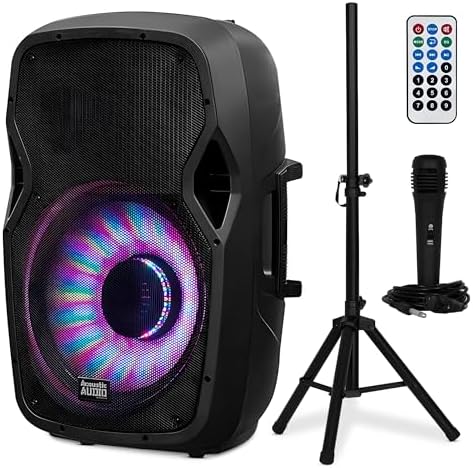


Parts of a Powered Speaker System That Matter
Several internal components determine how a powered speaker system handles different types of audio and how much power it can deliver. Each part serves a distinct role in the journey from an electrical pulse to a physical sound wave.
Class D and Class AB amplifiers determine power efficiency and heat
The amplifier is the core of the powered speaker system. It provides the power to drive the speaker drivers by increasing the electrical energy of the input signal. The type of amplifier used significantly impacts the heat and power efficiency of the unit. Systems using Class D amplifiers provide high power efficiency and smaller footprints because they use rapid switching to produce power. In contrast, Class AB amplifiers offer a different thermal management profile, often providing a smoother linear output but generating more heat during operation. Choosing between these standards determines how much heat the unit generates and how much space the internal electronics occupy.
Crossovers direct specific audio frequencies to the correct speaker drivers
The crossover is the traffic controller of the speaker. It splits the audio signal between different drivers so that each one only receives the frequencies it can reproduce accurately. Without a crossover, a small tweeter might be damaged by low-frequency signals, or a large woofer might fail to produce the high-frequency detail needed for clarity. The crossover’s design determines how smoothly the sound transitions from one driver to the next.
For a versatile entertainment setup, see our full Moukey Karaoke Machine review.
Large and small woofers produce different bass and mid-range tones
The woofer handles the low and mid-frequency reproduction. This is the large cone responsible for the “body” of the music and the bass notes. A larger woofer can move more air, which is necessary for heavy bass, while a smaller woofer is easier to move quickly for mid-range clarity.
Tweeters provide high-frequency detail and crispness for clear sound
The tweeter reproduces high-frequency detail. Because high-frequency sounds have very short wavelengths, they require a small, lightweight diaphragm that can vibrate extremely fast. The tweeter provides the “air” and crispness in the sound, such as the shimmer of cymbals or the clarity of speech.
Balanced XLR and TRS connections prevent noise over long cable runs
Connection standards like XLR vs. TRS determine the physical connection and balanced signal integrity for long cable runs. An XLR connection uses a balanced signal, which cancels out noise picked up along the cable. This is essential if you need to run cables over 5 meters to a stage or a far corner of a room. TRS connectors also support balanced signals but use a different physical plug shape. If you only need to connect a device 1 meter away, an unbalanced connection is often sufficient, but for professional setups, balanced connections prevent hum and interference.
What a Powered Speaker System Changes in Practice
Using a powered speaker system simplifies the physical setup of a room or stage. Because the amplifier is built-in, you only need to run a signal cable from your source to the speakers. This removes the need to mount a heavy amplifier to a wall or place it on a stand. In a home studio or a small cafe, this means you can place the speakers exactly where you want them without worrying about the proximity of a power-hungry external unit.
You can view the technical breakdown in our full M-AUDIO BX4 review.
Powered speakers offer plug and play convenience without changing driver output
The difference shows up most clearly in environments where cable management is a priority. In a live performance, a powered speaker system allows for a “plug and play” experience where the speaker is essentially its own power station. However, the difference does not show up in the actual sound quality of the drivers themselves. A woofer of a specific size will produce the same frequency range regardless of whether it is powered by an internal or external amplifier, provided the amplifier provides enough wattage to move it.
Multiple powered speakers simplify power distribution in large scale systems
One situation where the choice matters is power distribution. If you have a limited number of wall outlets, using multiple powered speaker systems is easier than powering a single large amplifier and four passive speakers. If you are building a large-scale PA system, you might choose a powered speaker system to distribute the power load across several different units rather than concentrating it all in one central amplifier.
Do the rear ports cause issues if I place them too close to a wall?
The rear ports on a powered speaker system can cause issues if placed too close to a wall because they rely on the space behind the cabinet to move air. When a speaker is placed near a surface, the sound waves reflecting off that surface can interfere with the air being moved by the port. This often leads to a significant boost in bass frequencies, which can make the low end sound muddy or “boomy” rather than clear.
Professional DJs should view our full TX310 Powered Speaker review.
Proper wall clearance maintains a neutral frequency response for speakers
To manage this, you should leave a gap between the back of the speaker and the wall. The amount of space needed depends on the size of the port and the size of the woofer. If you must place a speaker close to a wall, you may need to use physical barriers or acoustic treatment to absorb the reflected energy. Many users find that a gap of at least 15 to 30 cm helps maintain a neutral frequency response.
Who needs a Powered Speaker System and who does not
You need a powered speaker system if you want a simplified setup where the speaker is a self-contained unit. This is ideal for desktop setups, small studios, or retail environments where you want to place speakers in specific locations without running heavy power cables to every spot. If you need to connect a device directly to a speaker and want to avoid the complexity of matching an external amplifier to a specific set of passive speakers, a powered system is the correct choice.
Passive speakers are more cost effective for large scale installations
You do not need a powered speaker system if you already have a high-powered amplifier and a large number of passive speakers that you need to drive. In large-scale installations where many speakers are distributed across a large area, it is often more cost-effective to use a central amplifier to drive multiple passive units. If you require a specific type of external amplification—such as a specialized tube amplifier—you must use passive speakers, as a powered speaker system has its own internal electronics that cannot be bypassed.
The other active speaker set guides we have published
- Budget Powered Speaker Systems for Mobile DJs Compared
- Choosing the Best Powered Monitors for Desktop Computer Use
- The Powered Speaker Systems That Work Best for Near Field Monitoring
- Which Bluetooth Speaker Is Best for Tailgating?
- Best Powered Speaker Systems for Small Venues Under $400
- Playing Loud Music for a Backyard Party With a Powered Speaker System