

Portable tv options are defined by their power source, screen size, and internal hardware rather than marketing terms like “ultra-portable” or “smart-ready.” You need to identify if a device runs on an internal battery or an external power supply before choosing a model. Determine your required viewing environment to decide if you need high-nit brightness for outdoor use or specific input standards like HDMI 2.0 for high-resolution content.
Power and Battery Specifications for Portable Tv
- Battery Capacity – This measures the total electrical charge storage in milliampere-hours (mAh), with 30 of the 95 listings we screened stating a figure between 1,500 and 38,400 mAh. A higher mAh number allows for longer use without a power source.
- Operating Time – This is the duration a device runs on a single charge, with 20 of the 95 listings we screened stating a median of 6 hours. You should choose a duration that covers your specific trip length or activity.
- Charging Time – This is the time required to reach a full charge, with 3 of the 95 listings we screened stating a range from 2.5 to 3 hours. Shorter times are better for quick turnarounds between uses.
- 12V DC Input – This standard allows for a direct connection to vehicle power systems and solar arrays without needing an inverter. If you plan to run the device in a car or van, look for this specific input requirement.
- DC Power Adapter – This is the external power supply unit required to provide the necessary voltage for 12V systems. You must ensure the adapter’s output matches the specific voltage requirements of the portable tv.
Where these choices show up in our reviews
Each of the 3 shown here has its own full review on this site; they run from $152.99 to $819.99.
To understand the different categories available, see our guide on the different types of portable tvs offered.


Display and Media Specifications for Portable Tv
- Screen Size – This measures the diagonal physical length of the display, with 60 of the 95 listings we screened stating a range from 3.5 to 55 inches. Larger screens provide a more immersive experience but increase the weight and power demands of the unit.
- Resolution – This measures the total count of individual picture points, with 5 of the 95 listings we screened stating a median of 1,366,768 pixels. Higher pixel counts provide sharper images, though 1080p is the standard for most portable use cases.
- Nits – This determines the maximum brightness level for viewing in outdoor or high-ambient light environments. Higher nit counts are necessary if you intend to view the screen in direct sunlight or brightly lit rooms.
- Built-in DVD Player – This indicates the presence of an internal optical drive for physical discs, which 9 of the 95 listings we screened state. Most modern portable units omit this to save space and weight, requiring external media players instead.
- Storage Capacity – This measures the internal space for apps and media, with 22 of the 95 listings we screened stating a 128GB capacity. More storage allows you to keep more content offline without relying on external drives.
- RAM – This measures the system memory available for running applications, with 18 of the 95 listings we screened stating 8GB. Higher RAM allows the operating system to run more smoothly and switch between apps faster.
Connectivity and Compatibility for Portable Tv
- HDMI 2.0 vs. HDMI 1.4 – This determines support for 4K resolution and HDR metadata in portable setups. Choosing HDMI 2.0 allows you to connect high-end consoles or media players for higher-quality output.
- HDMI Cable – This is the physical wire that connects external sources like consoles or media players to the tv. You must ensure the cable’s connectors match the ports on both your source device and the portable tv.
- USB Ports – These are physical slots for connecting peripherals or drives, with 11 of the 95 listings we screened stating their presence. These are used for powering accessories or playing media directly from a thumb drive.
- TF Card Slot – This is a slot for microSD cards, with 9 of the 95 listings we screened stating it is available. These are often used as an expandable storage solution for offline movies.
- RCA Ports – These are the red, white, and yellow analog inputs, with 3 of the 95 listings we screened stating they are included. These are useful for connecting older legacy equipment like older game consoles.
- DVB-T2 / ATSC 3.0 – These standards determine if the internal tuner can receive local broadcast signals without an external box. If you need to watch over-the-air television, you must verify the specific standard supported in your region.
What Operating System does the portable tv use?
The operating system determines the software interface and the types of apps you can run, with 38 of the 95 listings we screened stating they use Android. Android provides a familiar interface for streaming apps, while other systems may be limited to basic media playback.
Beginners can start by viewing our guide on how a portable tv works and its basic functions.
Choosing a portable TV operating system based on required apps
You should choose a specific operating system based on the apps you need to use. If you require a specific streaming service, verify that the operating system supports that app before buying. Many units do not state the operating system, which can limit your ability to install custom software.
If a screen isn’t quite right, explore the alternatives to a portable tv for your space.
How does the physical design affect portability?
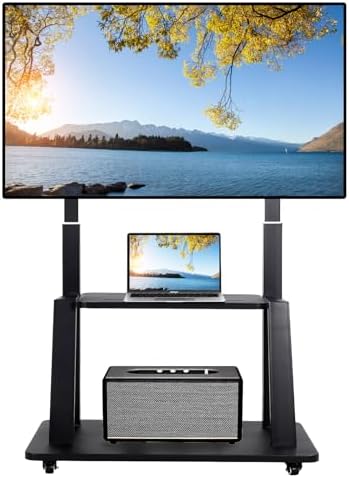
The physical design determines how the unit is transported and supported, with 44 of the 95 listings we screened stating a mobile stand is included. A mobile stand allows for hands-free viewing on a table or countertop without needing extra furniture.
Ensure your device meets safety rules by viewing portable tv certifications and safety standards today.
Determining if a portable TV includes a built-in stand
You must decide if a built-in stand meets your needs or if you require a more robust mounting system. Some units are designed for headrest mounting in vehicles, while others are intended for camping tables. If a listing does not state the presence of a stand, assume it is not included and you will need a separate mount.
Budget planning is easier when you see how much portable tv models cost at different levels.
Terms often confused in portable tv listings
Battery Capacity vs Operating Time
Battery Capacity measures the total electrical charge storage in mAh, while Operating Time measures how long the device can run on that charge. A high mAh count does not guarantee a long operating time if the screen brightness or processor requirements are high.
To see how the base moves, look at our full Rfiver DTF4001WHT Stand review for details.
How Resolution and Nits Differ in Portable TV Listings
Resolution measures the total pixel count for sharpness, while Nits measures the maximum brightness level. A high-resolution screen can still be difficult to see in daylight if the nit count is too low for outdoor environments.
This piece of furniture provides a unique look, so see our full Elegant Accent Cabinet review now.
HDMI Standards vs 12V Input
HDMI standards determine the quality of the video signal you can input, while 12V DC Input determines how the device receives power. You can have a high-end HDMI 2.0 port on a device that only supports 12V power, meaning it handles great video but requires a specific power source.
Detailed specifications are available in our full ApoloSign SW2499T spec breakdown for buyers.
Browse our other portable TV pages
Ebservant is reader-supported: some links on this page are affiliate links, and as an Amazon Associate Ebservant earns from qualifying purchases at no extra cost to you. Learn more.