

Our Top 3 Picks for a Large House
The best way to eliminate dead zones in a large house is the TP-Link Smart Hub & Whole Home WiFi Mesh System which covers 6,500 sq Ft for users needing broad coverage.
If you read one thing on this page, read these 3.

#1 – TP-Link Smart Hub & Whole Home WiFi Mesh System
Best for: connecting 100 smart home sensors simultaneously in a large home.
Why the TP-Link Smart Hub & Whole Home WiFi Mesh System is our #1 pick
- Listed at $152.99 in November 2026 – entry among those compared; the price moves, so check it
- 4.5 rating from 605 ratings
Coverage Area: 6,500 sq Ft · Max Device Capacity: 100-plus devices
To put that coverage area in context, pick #2 states 6000 square feet and pick #3 states 8,000 sq.ft..

#2 – TP-Link Deco X90
Best for: high-capacity connectivity for up to 200 devices across a large floor plan.
Why the TP-Link Deco X90 is our #2 pick
- Listed at $259.99 in November 2026 – mid-range among those compared; the price moves, so check it
- 4.5 rating from 27,457 ratings
Coverage Area: 6000 square feet · Max Device Capacity: 200 devices
For comparison on coverage area, pick #1 states 6,500 sq Ft and pick #3 states 8,000 sq.ft..
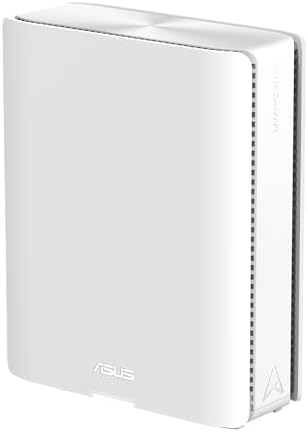
#3 – ASUS ZenWiFi BQ16 Pro Quad-Band WiFi 7 Mesh Router
Best for: maximizing range and speed with WiFi 7 technology in the largest properties.
Why the ASUS ZenWiFi BQ16 Pro Quad-Band WiFi 7 Mesh Router is our #3 pick
- Listed at $579.99 in November 2026 – premium among those compared; the price moves, so check it
- 3.7 rating from 221 ratings
Coverage Area: 8,000 sq.ft.
Against the other picks on coverage area, pick #1 states 6,500 sq Ft and pick #2 states 6000 square feet.
For a deeper look at high-end performance, see our full Orbi 970 review.
How EB Servant picked: we started from the 135 most-reviewed mesh wifi system listings in our retail dataset, removed duplicates, accessories and off-category products, and 97 qualified. The picks on this page were selected from those 97 candidates against this topic’s requirements. The order of the picks reflects fit to this topic; each shows its rating and the number of ratings behind it, so you can weigh how much to trust it. Specifications come from manufacturer listings and ratings from verified Amazon buyer reviews (data checked November 2026).
The Verdict, and the Basis for It
If you are trying to provide reliable internet to a multi-story home or a large property with thick interior walls, a single router will likely leave significant gaps in your connectivity. You need a multi-node system that can distribute the load across several access points.
The TP-Link Smart Hub & Whole Home WiFi Mesh System fits this situation by covering 6,500 sq Ft and handling 100-plus devices. If you need a WiFi 6 standard with 200 device support, the TP-Link Deco X90 is a strong alternative, while the ASUS ZenWiFi BQ16 Pro serves those needing WiFi 7 speeds.
We screened 97 mesh wifi systems and selected 10 for this comparison at EB Servant. Our shortlist covers a price range from $152.99 to $579.99, with a median price of $197.48.
Review the technical requirements to see the minimum figures your house needs.
Visit the FAQ to find answers to common questions about mesh networking.
Compare the comparison table for a side-by-side look at all the featured products.
You can also find the Amazon eero 6+ 3-pack review to see how it handles multi-device traffic.
Mesh Routers for a Large House in Brief, Before You Read the Rest
- Top pick: TP-Link Smart Hub & Whole Home WiFi Mesh System at $152.99 (Coverage Area: 6,500 sq Ft).
- Also picked: TP-Link Deco X90 at $259.99; ASUS ZenWiFi BQ16 Pro Quad-Band WiFi 7 Mesh Router at $579.99.
- We compared 10 Mesh Wifi Systems, from $139.98 to $579.99, median $197.48.
- Best buyer rating in the comparison: TP-Link Smart Hub & Whole Home WiFi Mesh System at 4.5/5 from 605 ratings.
Mesh Wifi Systems for a Large House Compared Side by Side
| Product | Price | Rating | Max Device Capacity | Coverage Area |
|---|---|---|---|---|
| TP-Link Smart Hub & Whole Home WiFi Mesh System | $152.99 | 4.5 (605 ratings) | 100-plus devices | 6,500 sq Ft |
| TP-Link Deco X90 | $259.99 | 4.5 (27,457 ratings) | 200 devices | 6000 square feet |
| ASUS ZenWiFi BQ16 Pro Quad-Band WiFi 7 Mesh Router | $579.99 | 3.7 (221 ratings) | Not stated | 8,000 sq.ft. |
| rockspace Tri-Band Mesh WiFi System | $139.98 | 4.1 (1,056 ratings) | Not stated | 6000 sq. Ft |
| NETGEAR Orbi Whole Home Mesh WiFi System RBK43 | $174.98 | 4.2 (973 ratings) | Not stated | 6,000 square feet |
| Netgear RBK763S-100NAS Orbi Tri-Band WiFi 6 Mesh System | $174.98 | 4.0 (329 ratings) | 75 devices | 7,500 sq. ft. |
| TP-Link Deco Mesh WiFi AXE11000 Deco XE200 | $399.99 | 4.4 (108 ratings) | Not stated | — |
| TP-Link Deco X55 | $219.98 | 4.4 (17,813 ratings) | 150 devices | 6500 square feet |
| TP-Link Deco XE70 Pro | $149.98 | 4.4 (3,925 ratings) | 200 Devices | 5,500 Sq. Ft Coverage |
| TP-Link Deco XE75 Pro AXE5400 | $299.99 | 4.3 (3,256 ratings) | 200 devices | 2,900 Sq. Ft. |
Prices are approximate and move frequently – check the current price before deciding. “Not stated” means the manufacturer listing does not give that figure – we do not estimate it.
Among our top picks, the value leader is TP-Link Smart Hub & Whole Home WiFi Mesh System because it provides 6,500 sq Ft of coverage for $0.02 per unit.
Each Pick for a Large House, Reviewed
The 3 picks below are reviewed in the same order as the cards above.
TP-Link Smart Hub & Whole Home WiFi Mesh System
The TP-Link Smart Hub & Whole Home WiFi Mesh System made the list because it provides a high device capacity of 100-plus devices and a 6,500 sq Ft coverage area, making it suitable for large homes with many smart home sensors.
What we like: This system includes a built-in smart hub for ZigBee, Bluetooth, and Wi-Fi smart home products to centralize device management. It also features a 6,500 sq Ft coverage area and supports over 100 devices simultaneously.
Keep in mind: The system uses dynamic backhaul, which manages data flow automatically but may differ in performance from a dedicated wired backhaul for high-bandwidth tasks.
TP-Link Deco X90
The TP-Link Deco X90 is a high-performance mesh router that offers a 6,000 square feet coverage area and supports up to 200 simultaneous device connections.
What we like: The Deco X90 features a 2.5Gbps port for high-speed internet input and a 6,600 Mbps total speed. It also supports wired Ethernet backhaul, which uses physical cables to connect nodes for faster data transfer between units.
Keep in mind: This model provides a 6,000 square feet coverage area, which may be smaller than the reach of the ASUS flagship for extremely large properties.
ASUS ZenWiFi BQ16 Pro Quad-Band WiFi 7 Mesh Router
The ASUS ZenWiFi BQ16 Pro Quad-Band WiFi 7 Mesh Router is a flagship choice for large houses, providing an 8,000 sq.ft. coverage area and the latest WiFi 7 technology.
What we like: This router supports speeds up to 30,000 Mbps and utilizes quad-band connectivity, which provides four separate frequency bands to distribute traffic. It also features a heat dissipation system to manage temperatures during heavy use.
Keep in mind: The price point is $579.99, which is significantly higher than the other options on this list.
Performance for a 3-story home
For a 3-story layout, verify if you can run an Ethernet backhaul—a wired connection between nodes—to ensure the signal does not degrade as it moves between floors. If you can run cables, the Deco X90’s wired backhaul capability provides a stable connection; if you cannot run cables, the TP-Link Smart Hub’s dynamic backhaul manages the signal over the air.
If you need a balanced mid-range option, view our comparison of the Deco XE70 Pro.
What Matters Most in a Mesh Router for a Large House
Total Square Footage Coverage
Select a mesh wifi system that covers at least 6,500 sq Ft to ensure signal reaches every room in a large house. While enterprise-grade Wi-Fi 6E/7 Access Points provide the performance ceiling for consumer-grade mesh hardware, these residential models provide the necessary scale for multi-room environments. You can determine the number of nodes needed by dividing your total area by the coverage area of a single unit, though most large homes require a multi-node setup to eliminate dead zones. The ASUS model provides the highest coverage capacity here, which is useful for the largest floor plans.
High-power modules and internal antennas for wall penetration capability
Prioritize systems with high-power front-end modules and internal antennas to maintain signal strength through heavy interior walls. The ASUS ZenWiFi BQ16 Pro Quad-Band WiFi 7 Mesh Router includes twelve internal antennas and sixteen high-power front-end modules to push signals through dense structures. While the specific decibel (dB) penetration rating is not stated for any of the models we evaluated, these hardware components are what allow a signal to reach a bedroom or basement without dropping. Signal degradation, a half-duplex bottleneck where nodes use the same radio for backhaul and client traffic, can occur if the hardware lacks sufficient internal power to penetrate obstacles. Choosing a model with robust internal antenna arrays helps ensure your signal maintains its integrity as it travels through multiple rooms.
Positioning mesh routers in central locations for node placement flexibility
Position your mesh routers to ensure signal reaches every room by placing nodes in central locations rather than in far corners. Because the TP-Link Smart Hub & Whole Home WiFi Mesh System supports a single Wi-Fi name and password, you can move nodes around the house without having to reconnect your devices. The TP-Link Deco X90 and ASUS ZenWiFi BQ16 Pro also support seamless roaming, allowing you to place nodes strategically to bridge gaps between the main router and distant zones. Proper placement is the most effective way to eliminate dead zones, as even the most powerful system will struggle if a node is placed too far from its parent unit. You should place nodes so that their coverage areas overlap slightly, ensuring a handoff between units is seamless as you move through the house.
Wired Ethernet backhaul capacity for high-speed data between nodes
Look for a mesh wifi system that supports wired Ethernet backhaul to ensure high-speed data moves between nodes without competing with your devices. The TP-Link Deco X90 supports Wired Ethernet Backhaul, which uses a physical cable to connect nodes, preventing the hidden node problem where nodes cannot see each other’s transmissions and cause latency. The TP-Link Smart Hub & Whole Home WiFi Mesh System uses dynamic backhaul, which automatically chooses the best path for data. For the highest possible throughput, a wired connection is the gold standard for large homes, but the dynamic options provided by the TP-Link Smart Hub & Whole Home WiFi Mesh System offer a simpler setup for users who cannot run cables through walls. High-end Tri-Band systems (e.g., TP-Link Deco XE75) serve as the baseline for high-density and high-speed home networking, and choosing a system that supports wired backhaul allows you to maintain those high speeds across every room.
Supporting many simultaneous connections for easy node expansion
Choose a system that supports a high number of simultaneous connections to prevent the network from clogging as you add more smart home devices. The TP-Link Deco X90 supports up to 200 devices, and the ASUS ZenWiFi BQ16 Pro Quad-Band WiFi 7 Mesh Router provides a high-capacity framework for a large home. You can add nodes to these systems to expand the footprint as your needs grow. The TP-Link Smart Hub & Whole Home WiFi Mesh System supports 100-plus devices, which is sufficient for a home with 50 smart home sensors. When expanding, ensure the new nodes support the same WiFi standard as your primary unit; for example, the ASUS ZenWiFi BQ16 Pro uses WiFi 7 technology, while the Deco X90 uses WiFi 6. Matching the standards ensures that your expanded network maintains consistent performance across the entire property.
Explore the detailed reviews for an in-depth analysis of each individual model.
See the article scope to understand exactly what is and isn’t covered in this guide.
Use the audience checklist to find the perfect match based on your specific needs.
Beginners should first learn mesh WiFi terms and specs before making a final purchase.
The Jobs Buyers Ask About, Checked Against Each Pick
Each row is a job this page’s buyers ask about, worked out from each pick’s listed max device capacity and WAN port speed and a typical need for the job.
| What you want to do | What it takes | How each pick does |
|---|---|---|
| Connect 50 smart home sensors simultaneously | at least 50 devices | TP-Link Smart Hub & Whole Home WiFi Mesh System: yes (100 devices); TP-Link Deco X90: yes (200 devices); ASUS ZenWiFi BQ16 Pro Quad-Band WiFi 7 Mesh Router: not stated |
| Connect 100 devices in a large home | at least 100 devices | TP-Link Smart Hub & Whole Home WiFi Mesh System: yes (100 devices); TP-Link Deco X90: yes (200 devices); ASUS ZenWiFi BQ16 Pro Quad-Band WiFi 7 Mesh Router: not stated |
| Support a 2.5 Gbps fiber internet plan | at least 2.5 Gbps | TP-Link Smart Hub & Whole Home WiFi Mesh System: not stated; TP-Link Deco X90: not stated; ASUS ZenWiFi BQ16 Pro Quad-Band WiFi 7 Mesh Router: not stated |
The needs are typical figures for each job, not manufacturer claims, and each pick’s result is worked out from its listed specifications. Your own job’s figure is the one that decides.
Who Buys Mesh Routers, and What It Really Costs
Who buys a mesh router, and what each one needs
- Remote software engineers — WiFi 6E (6GHz Band) to access a dedicated spectrum that avoids interference from legacy devices
- Large household owners — Ethernet Backhaul (Wired) to connect nodes via cables instead of over the air
- Smart home hobbyists — Max Device Capacity to manage many simultaneous connections without hitting a connection limit
- Content creators — 2.5 Gbps WAN Port to handle multi-gigabit fiber connections without bottlenecking the input
- Home office workers — WiFi 6 vs WiFi 6E vs WiFi 7 to determine the maximum theoretical throughput for their specific area
What a mesh wifi system really costs, and where to buy one
What to budget for on top of the mesh wifi system
- Ethernet cabling — needed to establish a wired backhaul for consistent speeds between nodes
- Power strips — needed to provide electricity to multiple nodes placed in different rooms
- Network switches — needed to expand available wired ports for a wired backhaul setup
What you can leave out of the budget
- External range extenders — these often cause signal degradation by using the same radio for both backhaul and clients
- Additional routers — a mesh system replaces the need for multiple separate routing units
Where this kind of product is normally sold
- Online marketplaces — offer frequent bundling options and competitive pricing but require careful shipping tracking
- Big-box electronics retailers — provide immediate local pickup and easier in-person warranty handling
- Specialty networking stores — offer expert advice on frequency congestion and complex network layouts
View our top picks to see the best mesh systems ranked at a glance.
Check the setup and warranty notes for information on installation, requirements, and support.
Consult the buying guide to learn the key criteria for selecting the right system.
Before the First Use, and After Delivery
Standard power outlet requirements for each mesh router node
Each mesh router requires a standard power outlet to operate. You must have a power source available for every node you plan to place throughout your home.
- The TP-Link Smart Hub & Whole Home WiFi Mesh System uses dynamic backhaul, which allows nodes to communicate wirelessly without a dedicated cable.
- The TP-Link Deco X90 supports a wired backhaul, meaning you can connect nodes via an Ethernet cable to provide a stable wired backhaul between nodes (a connection that uses physical wiring instead of radio waves).
- The ASUS ZenWiFi BQ16 Pro Quad-Band WiFi 7 Mesh Router supports multiple SSIDs (unique network names) to allow for different connection profiles.
Verifying order quantity and physical condition after delivery
Warranty coverage and return windows vary by seller and country. Confirm these details with your specific retailer before finalizing the purchase.
- Verify that the number of units matches your order, as these systems range from single-pack to multi-unit sets.
- Check for physical damage to the antennas or ports, as these components are difficult to repair once the unit is in use.
- Confirm the model number on the box matches your selection to ensure you receive the correct WiFi standard, such as WiFi 6 or WiFi 7.
Plug in the main node and complete the initial software configuration as soon as it arrives to ensure the system functions before the return window closes.
Connecting mesh systems to ISP modems via Ethernet cables
These mesh systems work with most existing ISP modems by connecting to the modem’s output via an Ethernet cable. If your ISP provides a gateway (a device that combines a modem and a router), you may need to put that gateway into bridge mode to prevent connection conflicts. None of the products listed here state a specific required ISP model, so check your gateway’s manual for “bridge mode” instructions to ensure the mesh system can manage the network traffic.
Questions Buyers Ask Before Choosing Mesh Routers for a Large House
Mesh WiFi System Coverage and Capacity for Large Homes
Coverage area measures the physical distance the signal reaches across your floor plan. The ASUS ZenWiFi BQ16 Pro Quad-Band WiFi 7 Mesh Router provides the largest coverage area at 8,000 sq.ft. for a 2-pack setup. How much space can you actually cover? The TP-Link Smart Hub & Whole Home WiFi Mesh System reaches 6,500 sq Ft, while the TP-Link Deco X90 covers 6,000 square feet.
Max device capacity determines the total number of simultaneous connections the mesh wifi system handles. The TP-Link Deco X90 supports the highest capacity of 200 devices. You can connect 100 devices in a large home using the TP-Link Smart Hub & Whole Home WiFi Mesh System, which supports 100-plus devices.
Mesh WiFi System Backhaul and Stability
Backhaul type determines if nodes communicate via cables or over the air to maintain speeds. The TP-Link Deco X90 supports Wired backhaul, which uses an Ethernet cable to link units and prevents the half-duplex bottleneck where nodes share the same radio for backhaul and client traffic. The TP-Link Smart Hub & Whole Home WiFi Mesh System uses dynamic backhaul, which allows the system to automatically choose the best path for data.
Signal interference from nearby electronics or dense apartment layouts often creates dead zones. To minimize this, the ASUS ZenWiFi BQ16 Pro Quad-Band WiFi 7 Mesh Router utilizes WiFi 7 technology and quad-band connectivity to provide more lanes for data. The TP-Link Deco X90 uses WiFi 6 to manage high-density traffic, while the TP-Link Smart Hub & Whole Home WiFi Mesh System provides a single Wi-Fi name and password for all connected devices.
Mesh WiFi System vs Range Extender
A mesh wifi system differs from a range extender by using multiple nodes that act as a single, cohesive network. While an extender simply repeats a signal—often cutting speeds in half—a mesh network manages traffic across all nodes to ensure consistent speeds throughout a large house. None of the products in our comparison are simple extenders; they are all multi-node systems designed to eliminate dead zones.
There is no monthly subscription fee to unlock the basic features of these mesh routers. The TP-Link Deco X90 includes HomeShield security and parental controls, while the ASUS ZenWiFi BQ16 Pro Quad-Band WiFi 7 Mesh Router includes AiProtection Pro and parental controls. The TP-Link Smart Hub & Whole Home WiFi Mesh System includes Trend Micro antivirus without a stated subscription requirement.
Which mesh wifi system should I buy for a home with many devices?
The mesh wifi system for a home with many devices depends on your specific count, but the TP-Link Deco X90 supports the highest capacity of 200 devices. This model is priced around $259.99 and provides high-density connectivity for large households.
Which mesh wifi system provides the best coverage for a large home?
The mesh wifi system providing the best coverage for a large home is the ASUS ZenWiFi BQ16 Pro Quad-Band WiFi 7 Mesh Router, which covers up to 8,000 sq.ft. in a 2-pack configuration. This flagship model is available for around $579.99.
Can these mesh wifi systems support a 2.5 Gbps fiber internet plan?
Yes, the mesh wifi systems can support a 2.5 Gbps fiber internet plan if the hardware includes a high-speed WAN port. The TP-Link Deco X90 features a 2.5Gbps port, and the ASUS ZenWiFi BQ16 Pro Quad-Band WiFi 7 Mesh Router supports speeds up to 30,000 Mbps.
Is the extra cost of WiFi 7 worth it over standard WiFi 6?
The extra cost of WiFi 7 over standard WiFi 6 is worth it if you require the 30,000 Mbps speed capacity and Multi-Link Operation of the ASUS ZenWiFi BQ16 Pro Quad-Band WiFi 7 Mesh Router. For standard high-speed needs, the TP-Link Deco X90 offers WiFi 6 at a lower price point of around $259.99.
To understand the underlying technology, view how mesh WiFi systems actually work.
Who Should Skip These Mesh Wifi Systems
High latency or frequent packet collisions in a crowded area can stem from the hidden node problem. This happens when nodes cannot see each other’s transmissions, causing them to broadcast at the same time and collide. Check that your mesh nodes have a clear line of sight or sufficient proximity to maintain a stable connection between them.
If your requirements involve heavy industrial use or professional-grade networking for a large office, these mesh routers may not provide the necessary infrastructure. These systems are designed for residential coverage rather than high-density enterprise environments requiring dedicated managed switches or specialized hardware.
For environments requiring the performance ceiling of enterprise-grade Wi-Fi 6E/7 Access Points, you should look for business-grade networking hardware. You can also explore more specific needs in our other guides, such as best mesh wifi system for smart home.
Every mesh wifi guide in this category
Ebservant is reader-supported: some links on this page are affiliate links, and as an Amazon Associate Ebservant earns from qualifying purchases at no extra cost to you. Learn more.