

Ebservant is reader-supported: some links on this page are affiliate links, and as an Amazon Associate Ebservant earns from qualifying purchases at no extra cost to you. Learn more.
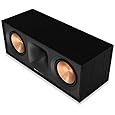
Klipsch RP 500C Center Channel Speaker Ebony Model 1065819
Affiliate links: we may earn a commission. Prices and availability are set by each store.
Choose Klipsch for energetic, projecting dialogue; choose SVS for smoother, neutral clarity. Klipsch uses horn loading for efficiency; SVS prioritizes midrange accuracy. These Center-Channel Speakers fit small to medium home theaters.
Klipsch RP-500C vs SVS Prime Center side-by-side comparison
Klipsch RP-500C Center Channel Speaker (Ebony) – Model 1065819, among Center-Channel Speakers, delivers lively horn-driven highs. The RP-500C Ebony uses a Tractrix horn and Cerametallic woofers for efficiency and reduced distortion. By contrast, SVS Prime Center prioritizes smooth midrange and balanced tonality for accurate dialogue reproduction. Both designs work well in home theaters; choose the tonal character that matches your ears and room acoustics.
Key Klipsch RP-500C technical highlights for quick comparison
- Tweeter: 1 Titanium LTS vented tweeter with Hybrid Tractrix Horn
- Woofers: Dual 5.25″ Spun Copper Cerametallic woofers
- Porting: Bass-reflex via rear-firing Tractrix port
- Finish and grille: Removable magnetic grille; ebony and walnut finishes
- Price: $299 USD (single speaker packaging, model 1065819)
How do tonal differences affect dialogue clarity in movies?
RP-500C projects forward, high-presence dialogue with strong articulation and perceived loudness in films. This Klipsch RP-500C center-channel speaker emphasizes upper-mid energy and presence, which makes whispered lines and soft dialogue easier to grasp. SVS Prime Center favors linear mids and a softer top end, which preserves natural timbre and reduces listener fatigue. In live rooms with reflective surfaces, the Klipsch top-end energy can sound bright without EQ or absorption treatment.
Choosing a center channel for room size and amplifier match
Klipsch RP-500C Center Channel Speaker (Ebony) – Model 1065819 suits small rooms that need efficient, projecting center imaging. The RP-500C Ebony works well with modest AVR power because horn-loading raises efficiency and perceived loudness. SVS Prime Center pairs well with neutral-powered amps and benefits from room correction for smoothness and tonal balance. Use basic impedance matching concepts and speaker sensitivity awareness to ensure your receiver or amplifier runs cleanly with your chosen speaker.
Practical amplifier and installation checklist
- Use 16 AWG speaker wire for runs under 25 feet (thicker gauge reduces loss).
- Check AVR documentation for supported impedance to ensure compatibility.
- Consider Audyssey, Dirac, or similar room correction for neutralization of peaks.
What placement and toe-in deliver the most precise imaging?
SVS Prime Center delivers tight, centered imaging when toed-in slightly toward the listening position. Place the center near ear height or slightly below the screen so voices sit at the same vertical level as your main speakers. Toe-in between 5 and 15 degrees sharpens focus; experiment in 5-degree steps to find the best sweet spot. If your screen is wall-mounted, angle the horn and align speaker axis toward the main seating area for direct energy and clearer imaging.
Klipsch RP-500C vs SVS Prime Center for movies and music use
Klipsch RP-500C Center Channel Speaker (Ebony) – Model 1065819 favors cinematic punch over refined musical neutrality. For action movies and broadcast content, the RP-500C Ebony brings dialogue forward and gives special effects strong presence, improving intelligibility. For critical music listening, SVS Prime Center reproduces tonal balance and natural voices without added brightness, making long sessions more pleasant. Match choice to primary use: choose energy and projection for movies, neutrality and balance for music.
How does out-of-box voicing or EQ change perceived timbre?
Klipsch RP-500C Center Channel Speaker (Ebony) benefits from mild treble reduction to tame horn brightness. Reduce a couple of dB in the 3-8 kHz band if the room makes the top end sound aggressive, and then re-listen. Apply room correction like Audyssey or Dirac to flatten measured response and reduce the need for manual EQ. When you use a subwoofer, set crossover between 80 and 120 Hz and adjust level for a seamless handoff and tight bass.
Will these speakers pair with a 50W-per-channel AVR? Yes, the Klipsch horn helps with low-powered amps, improving dynamics. Can I wall-mount them below a projector screen? Yes, careful placement and toe-in preserve imaging even when wall-mounted. Do I need a subwoofer? Yes for deep cinematic bass; set crossover and calibrate levels carefully to integrate the center and sub.