

Our Top 3 Picks for Smart Home
The best Mesh WiFi for Smart Home devices is the TP-Link Deco XE70 Pro which supports 200 Devices for users needing to manage a high density of smart home sensors and hardware.
3 picks, 3 different buyers. Find the one whose description sounds like you and stop reading.

#1 – TP-Link Deco XE70 Pro
Best for: high-density smart homes requiring 6 GHz band support and high device capacity.
Why the TP-Link Deco XE70 Pro is our #1 pick
- Listed at $149.98 in November 2026 – entry among those compared; the price moves, so check it
- 4.4 rating from 3,925 ratings
Coverage Area: 5,500 Sq. Ft Coverage · Max Device Capacity: 200 Devices
To put that coverage area in context, pick #2 states 4,500 sq. ft. and pick #3 states 6,000 square feet.
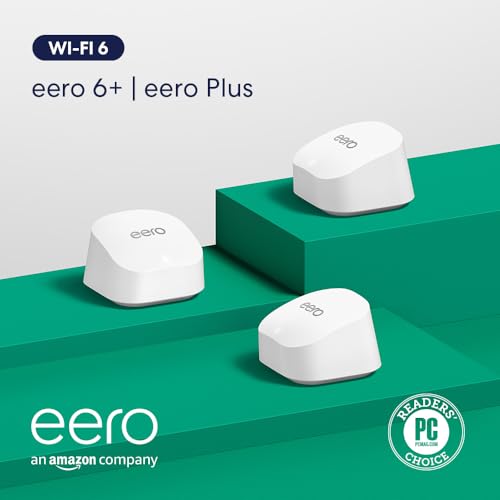
#2 – Amazon eero 6+ 3-pack
Best for: users seeking a reliable 3-node mesh network with integrated data protection and content filters.
Why the Amazon eero 6+ 3-pack is our #2 pick
- Listed at $209.99 in November 2026 – premium among those compared; the price moves, so check it
- 4.4 rating from 9,996 ratings
Coverage Area: 4,500 sq. ft. · Max Device Capacity: 75+ devices
For comparison on coverage area, pick #1 states 5,500 Sq. Ft Coverage and pick #3 states 6,000 square feet.

#3 – TP-Link Deco Powerline Hybrid Mesh WIFI System
Best for: smart home setups needing to extend connectivity through walls using existing electrical wiring.
Why the TP-Link Deco Powerline Hybrid Mesh WIFI System is our #3 pick
- Listed at $119.99 in November 2026 – entry among those compared; the price moves, so check it
- 4.2 rating from 2,885 ratings
Coverage Area: 6,000 square feet
Against the other picks on coverage area, pick #1 states 5,500 Sq. Ft Coverage and pick #2 states 4,500 sq. ft..
For a deeper dive into the hardware, see our full review of the Deco M5.
How EB Servant picked: we started from the 135 most-reviewed mesh wifi system listings in our retail dataset, removed duplicates, accessories and off-category products, and 97 qualified. The picks on this page were selected from those 97 candidates against this topic’s requirements. The order of the picks reflects fit to this topic; each shows its rating and the number of ratings behind it, so you can weigh how much to trust it. Specifications come from manufacturer listings and ratings from verified Amazon buyer reviews (data checked November 2026).
What We Recommend and Why
Homeowners with large houses often find that standard mesh nodes fail to maintain speeds in distant rooms, leading to “dead zones” where smart devices frequently go offline. You need a system that balances wide area coverage with the ability to maintain high-speed throughput.
The TP-Link Deco XE70 Pro covers a 5,500 Sq. Ft Coverage area, providing a robust footprint for large properties. If you need a 3-pack for a specific layout, the Amazon eero 6+ 3-pack is a versatile choice, while the TP-Link Deco Powerline Hybrid Mesh WIFI System is the right pick for reaching areas where WiFi signals struggle to penetrate.
We selected these models after screening 97 Mesh Wifi Systems (mesh wireless fidelity system) and comparing 10 options here at EB Servant. The selection covers a price range from $119.99 to $209.99, with a median price of $149.99.
Learn how to select the best hardware by viewing the buying guide.
Check the installation steps and coverage details in the setup and warranty notes.
View a side-by-side breakdown of all models in the comparison table.
What This Page Concludes About Mesh Wifi Systems for Smart Home
- Top pick: TP-Link Deco XE70 Pro at $149.98 (Coverage Area: 5,500 Sq. Ft Coverage).
- Also picked: Amazon eero 6+ 3-pack at $209.99; TP-Link Deco Powerline Hybrid Mesh WIFI System at $119.99.
- We compared 10 Mesh Wifi Systems, from $109.99 to $209.99, median $149.99.
- Best buyer rating in the comparison: TP-Link Deco S4 at 4.6/5 from 15,321 ratings.
- Not covered by these picks: connect smart home devices in a very large home – needs 10,000 square feet, and none of the picks reaches it.
- Cheapest in the comparison that can connect 50 smart home sensors simultaneously: TP-Link Deco S4 at $109.99 (75 devices).
Mesh Wifi Systems for Smart Home Compared Side by Side
| Product | Price | Rating | Coverage Area | Max Device Capacity |
|---|---|---|---|---|
| TP-Link Deco XE70 Pro | $149.98 | 4.4 (3,925 ratings) | 5,500 Sq. Ft Coverage | 200 Devices |
| Amazon eero 6+ 3-pack | $209.99 | 4.4 (9,996 ratings) | 4,500 sq. ft. | 75+ devices |
| TP-Link Deco Powerline Hybrid Mesh WIFI System | $119.99 | 4.2 (2,885 ratings) | 6,000 square feet | Not stated |
| TP-Link Deco S4 | $109.99 | 4.6 (15,321 ratings) | 3,800 sq ft | 75 devices |
| Google Wifi AC1200 GA02434-US | $116.65 | 4.5 (15,196 ratings) | 4500 square feet | Not stated |
| TP-Link Deco X50 AX3000 Mesh WiFi System | $199.99 | 4.4 (348 ratings) | 6,500 sq.ft | 150 devices |
| Linksys MX5300 Velop AX Whole Home WiFi 6 System | $149.99 | 4.4 (994 ratings) | 3,000 sq ft | 50 devices |
| TP-Link Smart Hub & Whole Home WiFi Mesh System | $152.99 | 4.5 (605 ratings) | 6,500 sq Ft | 100-plus devices |
| TP-Link AC2200 Deco M9 Smart Whole Home WiFi | $149.99 | 4.5 (470 ratings) | 6,500 sq. Ft. | 100-plus devices |
| NETGEAR Orbi Pro WiFi 6 Mini Mesh Router SXR30 | $199.99 | 3.9 (1,320 ratings) | 2,000 sq. ft. | 200 connected devices |
Prices are approximate and move frequently – check the current price before deciding. “Not stated” means the manufacturer listing does not give that figure – we do not estimate it.
Among our top picks, the value leader is TP-Link Deco XE70 Pro because it supports 200 devices at a lower cost per unit for a smart home.
The Full Review of Each Pick for Smart Home
The 3 picks below are reviewed in the same order as the cards above.
TP-Link Deco XE70 Pro
The Deco XE70 Pro made this list because it provides high-performance WiFi 6E capabilities and a high device capacity for complex smart home setups. It is built to handle a large number of simultaneous connections, making it suitable for households with many smart sensors.
What we like: This model supports the 6 GHz band, which provides a dedicated spectrum to avoid interference from legacy 2.4GHz and 5GHz devices. It supports a 200-device capacity, which is enough to connect 50 smart home sensors simultaneously with significant overhead for other devices. The unit also features a 2.5 Gbps port to handle high-speed internet input.
Keep in mind: The coverage area is listed at 2,900 sq. ft. for the single unit, which may require additional nodes if your home exceeds that footprint.
Amazon eero 6+ 3-pack
We selected the Amazon eero 6+ 3-pack as a reliable mainstream ecosystem that balances coverage and ease of use for smart home connectivity. It provides a consistent mesh network that supports a high volume of connected devices.
What we like: This 3-pack offers a 4,500 sq. ft. coverage area and supports 75+ devices. It uses WiFi 6 technology and supports 160 MHz radio channels to manage data throughput. The eero Plus subscription adds features like ad and tracker blocking for connected devices.
Keep in mind: The 75+ device capacity is lower than some other options, so it may not suit homes with extremely dense IoT deployments.
TP-Link Deco Powerline Hybrid Mesh WIFI System
The Deco Powerline Hybrid Mesh WIFI System is included for its specialized powerline solution, which uses your home’s electrical wiring to provide smart home stability. This is a distinct alternative for users who face signal degradation or physical layout obstacles that standard wireless mesh cannot overcome.
What we like: This system offers a 6,000 square feet coverage area, which is the largest among our selections. It uses Powerline and RJ45 connectors to establish a stable connection for gaming, home, and office use. The system also includes built-in parental controls and antivirus features.
Keep in mind: This is a dual-band system and does not state a WiFi 6 or 6E standard, which may limit peak speeds compared to newer WiFi standards.
Is it worth spending more on a “tri-band” system versus a “dual-band” one for smart home use?
Tri-band systems are worth the extra cost when you need a dedicated backhaul, which is the radio frequency used for nodes to communicate with each other rather than with your devices. A dedicated backhaul prevents a half-duplex bottleneck, where nodes share the same radio for both backhaul and client traffic, which can cut available speeds in half. While the products in this section provide various capacities and coverage, none of these specific models state a tri-band configuration. If your smart home requires high-bandwidth tasks like 4K streaming alongside many IoT sensors, a tri-band system provides the performance ceiling to prevent congestion.
Verify your home’s technical needs by checking the requirements.
See our final recommendations at a glance in our top picks.
Get answers to common technical questions in the FAQ.
You can also view the complete spec breakdown for the Deco S4.
What to Look For in a Mesh Router for Smart Home
Device Capacity Limits
Each node in these mesh wifi systems can handle between 75 and 200 devices, which determines how many smart home sensors and bulbs stay connected simultaneously without dropping off. You should count your planned smart home devices; if you plan to exceed 75 connections, the TP-Link Deco XE70 Pro is the only option here stating a capacity of 200 devices. The Amazon eero 6+ 3-pack supports 75+ devices, while the TP-Link Deco Powerline Hybrid Mesh WIFI System does not state a specific device limit. High-density smart homes benefit from higher capacity because “always-on” devices can clog a router’s connection table if the limit is too low.
Why these mesh routers lack Zigbee or Thread compatibility
None of the mesh wifi system options we evaluated state support for Zigbee or Thread, which are dedicated protocols for smart home communication. You may need to pair a separate smart home hub with these routers if your devices do not use standard Wi-Fi. While some routers include these radios to reduce the load on your Wi-Fi network, the specific models here rely on the WiFi standard for connectivity. The TP-Link Deco XE70 Pro uses WiFi 6E, which provides a 6 GHz band to help reduce interference between your smart home devices and other household electronics.
How the TP-Link Deco Powerline Hybrid Mesh WIFI System penetrates walls
Signal penetration through walls is influenced by the coverage area, with the TP-Link Deco Powerline Hybrid Mesh WIFI System offering the largest reach at 6,000 square feet. This system uses Powerline technology, which sends data through your home’s electrical wiring to bypass physical obstructions like thick walls or floors. For comparison, enterprise-grade Wi-Fi 6E/7 Access Points provide the performance ceiling for consumer-grade mesh hardware, but these home units are designed to balance range with ease of setup.
How automated device grouping organizes smart home zones
Automated device grouping allows you to organize smart home devices into specific zones, though the data does not state if these specific models offer internal grouping logic. The Amazon eero 6+ 3-pack includes an eero Plus subscription that provides data protection and content filters for your connected devices. Because these systems manage your network’s traffic, you can often use the associated apps to manage how different groups of devices access the internet. The TP-Link Deco Powerline Hybrid Mesh WIFI System includes specific features like Guest Mode and Parental Control to help segment how users and devices interact with the network.
How dedicated backhaul bandwidth prevents smart home speed bottlenecks
Dedicated backhaul bandwidth is the capacity reserved for communication between mesh nodes, which prevents the speed of your smart home devices from being cut in half by a half-duplex bottleneck. The TP-Link Deco XE70 Pro uses the 6 GHz band for its WiFi 6E standard, which provides a dedicated spectrum to avoid interference from legacy 2.4GHz and 5GHz devices. While the Amazon eero 6+ 3-pack uses TrueMesh technology to route traffic, it does not state a dedicated backhaul frequency. High-end Tri-Band systems (e.g., TP-Link Deco XE75) serve as the baseline for high-density and high-speed home networking by providing multiple bands for node-to-node communication.
What Each Job Calls For vs What These Picks State
Match the job you actually need done to the figure it calls for, then check which picks state that figure or more. Where none do, the row says so.
| What you want to do | The figure it calls for | Picks at or above it |
|---|---|---|
| connect smart home devices in a high-density area | 6 GHz band | Deco XE70 Pro |
| connect smart home devices in a large house | 6,000 square feet | Deco Powerline Hybrid |
| connect smart home devices in a very large home | 10,000 square feet | none of these picks; a high-end tri-band system with 3+ nodes would be required |
These figures are the levels this category is generally held to, not manufacturer claims. A pick at or above a figure states that number; how it reaches it and the rest of your setup still decide the job, so check them against your own workload before buying.
Who Buys Mesh Wifi Systems, and What It Really Costs
Who buys a mesh wifi system, and what each one needs
- Smart home hobbyists — WiFi 6E (6GHz Band) to avoid interference from legacy 2.4GHz and 5GHz devices
- Remote software developers — 2.5 Gbps WAN Port to handle multi-gigabit fiber connections without bottlenecking
- Large household owners — High-end Tri-Band systems to provide a performance ceiling for high-density home networking
- Content creators — Ethernet Backhaul (Wired) to avoid the half-duplex bottleneck where nodes share radio for backhaul and clients
- Apartment dwellers — WiFi 6E (6GHz Band) to reduce frequency congestion in dense urban areas
What a mesh router really costs, and where to buy one
What to budget for on top of the mesh router
- Ethernet cabling — required for wired backhaul to connect nodes together
- Power strips — needed to provide electricity to multiple nodes throughout the home
- Cat6 cables — required to support high-speed wired connections between nodes
- Network switches — needed to expand wired ports for multiple hardwired devices
What you can leave out of the budget
- WiFi extenders — unnecessary when a mesh system provides a unified network
- External antennas — unnecessary as most mesh nodes have integrated internal antennas
- Signal boosters — unnecessary as mesh nodes manage signal distribution automatically
Where this kind of product is normally sold
- Online marketplaces — offer frequent bundling and competitive pricing for multiple-node systems
- Big-box electronics retailers — provide immediate availability and easy in-store returns
- Specialized networking stores — offer expert advice on complex configurations like wired backhaul
Explore in-depth analysis for every model within the detailed reviews.
Understand the limitations and inclusions of this guide in the scope.
What It Takes to Run One, and What to Verify
What you need before you start
Each mesh wifi system requires a power outlet near your modem to begin the setup process.
- The TP-Link Deco XE70 Pro requires a power source to activate its 6 GHz band, which provides a dedicated spectrum to avoid interference from legacy 2.4GHz and 5GHz devices.
- The Amazon eero 6+ 3-pack requires a power source for each of its 3 units to provide coverage across 4,500 sq. ft.
- The TP-Link Deco Powerline Hybrid Mesh WIFI System requires a power outlet for each of its 3 nodes, using the electrical wiring to extend the signal.
Verifying your mesh network on arrival
Warranty terms and return windows vary by seller and country, so verify your specific purchase terms immediately.
- Confirm the number of units matches your order (such as the 3-pack for the eero 6+ or the 3-pack for the Deco Powerline) to ensure you have enough nodes for your coverage area.
- Check that the TP-Link Deco XE70 Pro includes the 2.5 Gbps port, which allows the hardware to handle multi-gigabit fiber connections without bottlenecking.
- Verify the physical condition of the Deco Powerline units, as these are often used in high-traffic areas and are the most likely to experience external wear.
Plug in the main node and complete the initial setup via the app while your return window is still open.
Connecting mesh routers to existing modems for home setup
You do not need to replace your existing internet modem; these mesh routers connect to your current modem to distribute the signal throughout your home. Most mesh systems connect to the modem via an Ethernet cable, which provides a stable wired backhaul between nodes. If you need to connect a remote node that lacks a power outlet, you may need to buy a PoE Injector (a device that provides power over the ethernet cable) and an Ethernet cable that matches the RJ45 connection type on the router.
Setting up your smart home wifi mesh starts with connecting the primary node to your modem. You then place the additional nodes in areas with poor signal and sync them to create a single network. Once the nodes are linked, your smart home devices connect to the strongest available signal automatically.
Mesh Wifi Systems for Smart Home: The Questions This Choice Raises
Which mesh wifi system should I buy for a home with many devices?
The mesh wifi system for a home with many devices depends on your specific device count, with the TP-Link Deco XE70 Pro supporting 200 devices. You can choose this model for high-density needs, or the Amazon eero 6+ 3-pack which supports 75+ devices for a lower entry price of $209.99.
How many smart home sensors can the Amazon eero 6+ handle?
The Amazon eero 6+ can handle 50 smart home sensors because its 75+ device capacity exceeds that requirement. This 3-pack provides enough overhead to maintain a stable connection for a large array of IoT hardware.
What is the total cost of ownership including extra nodes for full coverage?
The total cost of ownership depends on your floor plan, with the Amazon eero 6+ 3-pack costing $209.99 for three units. For a single-unit setup, the TP-Link Deco XE70 Pro is priced around $149.98, while the TP-Link Deco Powerline Hybrid Mesh WIFI System offers a 3-pack for $119.99.
Which mesh router is best for a smart home?
The mesh router best for a smart home relies on your specific coverage needs, such as the 6,000 square feet offered by the TP-Link Deco Powerline Hybrid Mesh WIFI System. If you need higher device density, the TP-Link Deco XE70 Pro provides the 6 GHz band, which offers a dedicated spectrum to avoid interference from legacy 2.4GHz and 5GHz devices.
Find the perfect match for your specific household in the audience checklist.
Who Should Skip These Mesh Routers
The Hidden Node Problem causes packet collisions and latency when nodes cannot see each other’s transmissions. You can mitigate this by ensuring your mesh network layout allows for clear lines of sight between nodes or by placing nodes closer together. Does your home have dense walls that might block the signal? The TP-Link Deco Powerline Hybrid Mesh WIFI System uses Powerline technology, which sends data through your home’s electrical wiring to bypass physical obstructions that typically cause these types of transmission failures.
If you require a system to manage a massive enterprise-level infrastructure or a warehouse with over 10,000 square feet of coverage, these options are the wrong tool. None of the selections here reach the coverage scale required for such large-scale industrial environments.
For those specific high-scale requirements, you should look for Enterprise-grade Wi-Fi 6E/7 Access Points. If you need a more specialized consumer setup, you may find a better fit in our guide best wifi 6e mesh system.
Browse our other mesh router pages
- Best WiFi 6E Mesh Systems
- Choosing the Best Mesh WiFi System for Streaming
- Getting WiFi to Reach an Upstairs Bedroom With a Mesh WiFi System
- Which Mesh WiFi System Eliminates Dead Zones in a Large House?
- The Mesh WiFi Systems That Fix Slow Internet in a Home Office
- Best Mesh WiFi Systems for Large Homes
Ebservant is reader-supported: some links on this page are affiliate links, and as an Amazon Associate Ebservant earns from qualifying purchases at no extra cost to you. Learn more.