

QLED TV technology provides high-brightness color reproduction and wide viewing angles through quantum dot layers. You do not need a quantum dot TV to achieve a high-quality home cinema experience, as several different display technologies and acquisition methods offer similar visual results. A buyer should determine if they need the specific brightness of a QLED or if a different panel type meets their room’s lighting conditions. Measure the average brightness of your viewing space; if you watch in a dimly lit room, high-peak brightness is less critical than contrast performance.
Is an OLED TV a better alternative to a QLED TV?
An OLED TV is a primary alternative to a QLED TV because it uses self-emissive pixels to create perfect black levels. While QLEDs rely on a backlight and color filters, OLED pixels turn off completely, eliminating the blooming and halos that occur when bright objects sit against dark backgrounds. If you prioritize perfect contrast and motion clarity over high peak brightness, OLED is the standard choice. However, OLED panels generally have lower peak luminance than high-end QLED models, which can affect the vibrancy of HDR content in very bright rooms. The transition point occurs when your primary viewing environment has significant sunlight; in those cases, a QLED’s higher brightness may outperform an OLED’s contrast.
Perfect blacks and infinite contrast in OLED
OLED contrast is defined by the ability of every individual pixel to shut off entirely. This removes the need for local dimming zones, which are the hardware components that attempt to manage light in QLED and LED displays. In a scene like a space exploration film where small stars sit against a pitch-black void, an OLED avoids the greyish haze that can appear around bright points on a QLED. Because the contrast is inherent to the pixel structure rather than a backlight management system, OLED remains the benchmark for image depth in dark environments.
Where these choices show up in our reviews
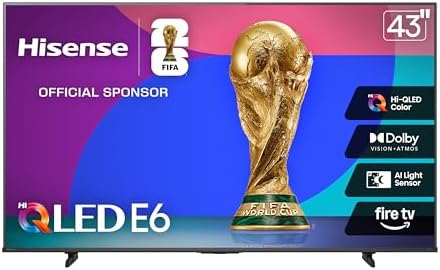
3 options shown here, $209.99 to $1797.99, each with its own full review behind its name.


Can a standard LED TV provide the same results?
A standard LED TV is an alternative to a QLED TV that uses a traditional LCD panel with a standard LED backlight. These sets are often the most cost-effective way to get a large screen, but they lack the quantum dot layer that provides the expanded color volume of a QLED. If your goal is simply a clear 4K image for casual viewing like news or standard cable television, a standard LED TV provides sufficient results. The point at which a standard LED TV stops making sense is when you require high-fidelity color reproduction or HDR content, where the lack of a quantum dot layer results in less vibrant and less accurate colors compared to a QLED.
Lower cost for standard viewing requirements
Standard LED TVs offer a lower price point because they omit the manufacturing complexity of quantum dot films. For a viewer who prioritizes screen size over color depth, a larger standard LED TV often provides better value than a smaller QLED. If you primarily watch content with high-key lighting, such as daytime sports or sitcoms, the color limitations of a standard LED are less noticeable. The difference is most apparent in high-contrast scenes where a standard LED may struggle to produce deep blacks or saturated hues.
Is a projector a viable alternative to a QLED TV?
A projector is an alternative to a QLED TV that uses light projection to create a massive image on a wall or screen. This route is ideal for users who want a cinematic experience larger than 100 inches, which would be prohibitively expensive or physically impossible with a standard QLED. Projectors offer a different scale of immersion, but they require a dark room to maintain acceptable contrast and color accuracy. The point at which a projector stops making sense is when you need to watch content in a bright living room or require the consistent, high-resolution clarity of a fixed-pixel display like a QLED.
Massive scale and cinematic size
Projector scale allows for a 120-inch or 150-inch image that mimics a movie theater. Because the light is projected, the “screen” size is limited only by the wall space available. This is a distinct advantage for dedicated media rooms where the viewer can control the lighting. However, because the light must pass through a projection lens and a surface, the peak brightness and color saturation will rarely match the direct-view output of a QLED TV.
Should you consider a refurbished TV instead of a QLED?
A refurbished TV is an alternative to a QLED TV that allows you to access premium display technology at a lower price point. These are units that have been inspected, repaired, and certified by a third party or the original manufacturer. This route is effective when you want the specific features of a QLED—such as its color volume and brightness—but cannot meet the retail price of a new unit. It stops making sense when the warranty period is too short or the shipping costs for a large screen outweigh the savings from the refurbishment.
Accessing premium specs at lower costs
Refurbished value is found in the price gap between a new QLED and a certified pre-owned model. You can often find high-end panels that were returned for minor cosmetic issues which do not affect the display quality. For a budget-first shopper, this provides a path to high-performance hardware that would otherwise be out of reach. The risk is reduced by selecting units that come with a multi-month warranty and a clear inspection report from the refurbisher.
Comparison of QLED TV alternatives
| Alternative | Who it suits | Main advantage | Where it breaks down |
|---|---|---|---|
| OLED TV | Dark room enthusiasts | Perfect black levels | Lower peak brightness |
| LED TV | Budget-conscious viewers | Lower cost per inch | Lower color volume |
| Projector | Home theater owners | Massive screen size | Requires dark room |
| Refurbished TV | Value-driven shoppers | Lower price for high-end | Shorter warranty periods |
When is buying a QLED TV the right answer?
Buying a QLED TV is the right answer when you need a balance of high peak brightness and wide color volume in a standard living room environment. It is the correct choice if you frequently watch HDR content in a room with some ambient light, as it provides more brightness than an OLED while offering better colors than a standard LED. You should choose a QLED when you want a large, high-quality screen that maintains its color accuracy from side angles. If your room is very dark and you want the best possible contrast, OLED is a better path. If your budget is the primary constraint and you do not care about color depth, a standard LED or a refurbished model provides the most practical outcome.
Ebservant is reader-supported: some links on this page are affiliate links, and as an Amazon Associate Ebservant earns from qualifying purchases at no extra cost to you. Learn more.