

QLED TV certifications include legally mandated safety marks for electrical and electromagnetic compatibility, voluntary regional energy efficiency standards, and decorative brand-specific badges. A buyer needs a safety certification like UL or CE to ensure the device meets fire and shock hazards, while energy labels provide data on power consumption. You should prioritize safety and regional compliance marks over marketing-led “eco” badges, which often lack standardized verification. Check your local power requirements to see if your region demands specific voltage ratings, such as 110-120V or 220-240V.
What do UL and ETL safety marks guarantee for a QLED TV?
UL and ETL safety marks guarantee that a QLED TV has undergone testing to prevent electrical fires, shocks, and mechanical failures. These marks are issued by Underwriters Laboratories (UL) and Intertek (ETL), which are independent testing laboratories. They verify that the internal components, including the power supply unit and the heat-generating panels, meet specific insulation and grounding requirements. These marks do not guarantee the longevity of the display panels, the accuracy of the colors, or the speed of the smart interface. They only certify that the device is safe to plug into a wall outlet without posing an immediate risk to the home’s electrical infrastructure.
Protection against electrical surge and heat
The high power draw required by QLED TVs necessitates robust heat management and surge protection within the internal circuitry. Safety standards ensure that the power supply can handle a specific peak load without melting housing components or causing short circuits. If a power surge occurs, a certified unit is designed to fail in a way that prevents the spread of fire. Does the TV have a built-in surge protector? Most certified units include internal components rated to handle specific transient voltage spikes to protect the internal logic boards from minor fluctuations in the power grid.
Where these choices show up in our reviews
From $209.99 to $1797.99: 3 of the 15 in this category we have reviewed in full.
Determining the right scale is easy when you look at how to choose the correct screen size for QLED TVs.


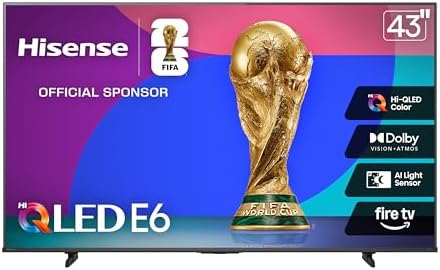
What does the Energy Star rating mean for a quantum dot TV?
The Energy Star rating is a voluntary certification that indicates a QLED TV meets specific energy efficiency guidelines set by the U.S. Environmental Protection Agency (EPA). It guarantees that the device consumes a certain amount of energy in standby mode and during active use, helping to reduce the overall carbon footprint of the household. Energy Star does not guarantee a specific level of brightness or image quality, nor does it dictate the lifespan of the LEDs. It only measures the ratio of power consumed to the performance output of the display.
Power consumption in standby mode
Energy Star requirements often focus on the power draw when the TV is “off” but still connected to power. A certified TV must stay below a specific wattage, such as 0.5W or 1.0W, depending on the specific version of the standard. This prevents “vampire” power drain, which can add up over the years of ownership. Because QLED TVs use complex backlighting systems, meeting these low-power standby requirements is a significant engineering hurdle that ensures the device remains efficient even when not in use.
Which regional certifications are required for international QLED TV shipping?
Regional certifications like CE (Europe), FCC (USA), and CCC (China) are mandatory for the legal sale and shipment of QLED TVs in their respective markets. These marks ensure the TV does not emit electromagnetic interference (EMI) that could disrupt radio communications or other electronic devices. They also ensure the device meets local safety requirements for high-voltage components. These certifications do not guarantee the software performance of the TV or the durability of the physical screen. They are strictly about the physical and electromagnetic safety of the hardware.
You can clarify your hardware needs by researching what HDMI version for QLED TVs you actually need for your devices.
Electromagnetic interference and radio frequency
The FCC mark, for example, ensures that the high-frequency switching of the TV’s power supply does not interfere with Wi-Fi, cellular signals, or emergency radio frequencies. This is critical because QLED TVs often have high-density internal components that can generate significant noise if not properly shielded. Without these certifications, a device might cause nearby electronics to malfunction or lose connectivity. If you are shipping a TV internationally, you must verify that the destination country’s specific standard is met, as a CE mark is not valid for sale in the United States.
What safety failure modes do QLED TVs have and which marks address them?
QLED TVs are susceptible to overheating of the power supply, insulation failure in high-voltage areas, and electromagnetic interference from the backlight array. The UL and ETL marks specifically address the risk of fire caused by overheating components or faulty wiring. These certifications ensure that the heat sinks and internal cooling pathways are sufficient to manage the thermal output of the quantum dot layer and the LED backlight. They also ensure that the high-voltage AC power is safely converted to low-voltage DC power before it reaches the sensitive display drivers.
Thermal runaway and component melting
Thermal runaway occurs when a component’s heat increases its resistance, leading to even more heat and eventual melting or fire. Safety standards require that the TV’s internal layout includes sufficient spacing and heat-dissipating materials to prevent this. These standards are tested by applying maximum load to the TV and measuring the surface temperatures of internal components. If a component exceeds a specific temperature threshold, the device fails the safety certification. This prevents the “melting” of plastic housings or the combustion of internal cables during long periods of use.
You can find a comprehensive breakdown in our full TCL 75R635 review to see how this mini LED model performs.
How can a buyer verify a certification mark is real?
Verifying a certification mark involves checking for official documentation rather than relying on the stickers printed on the cardboard packaging. Manufacturers often print “Energy Star” or “UL” logos on boxes even if the specific model has not been certified. You should perform these checks to ensure the device is legitimate:
- Check the physical sticker on the back of the TV, which usually contains the certification number and the laboratory’s identification.
- Look for a “Certificate of Compliance” or a “Declaration of Conformity” document in the included paperwork.
- Search the official website of the certifying body, such as the UL Product iQ database, using the model number provided by the manufacturer.
- Verify that the Energy Star logo includes the current year or version number, as older versions may no longer be valid for new hardware.
Which marks are non-negotiable for a QLED TV purchase?
Safety certifications like UL, ETL, or the regional equivalent (such as CE or CCC) are non-negotiable requirements for any QLED TV. These marks ensure that the device will not pose a fire or shock hazard to your home, which is the most critical factor for a large, high-power appliance. Energy Star and other efficiency ratings are important for long-term operating costs but are secondary to physical safety. You should treat any TV lacking a recognized safety mark as a significant risk to your household’s electrical safety.
Prioritizing electrical safety marks over energy efficiency for QLED TVs
When choosing a TV, prioritize the presence of a safety mark first. If a TV has a UL or ETL mark, it has passed rigorous laboratory tests for electrical safety. Once safety is confirmed, you can then weigh efficiency marks like Energy Star or regional power-saving standards against your budget. A TV without a recognized safety mark may be cheaper, but the cost of a house fire or a damaged electrical system far outweighs any initial savings on the purchase price.
Ebservant is reader-supported: some links on this page are affiliate links, and as an Amazon Associate Ebservant earns from qualifying purchases at no extra cost to you. Learn more.