

Ebservant is reader-supported: some links on this page are affiliate links, and as an Amazon Associate Ebservant earns from qualifying purchases at no extra cost to you. Learn more.
Our Top 3 Picks for Beginners
The best mixing console for beginners is the Pyle PMXU67BT 6-Channel Console Style Audio Mixer, which provides 6-Channel inputs to manage multiple audio sources for those starting out.
The picks are right below, in order. Everything after them is the reasoning, if you want it.
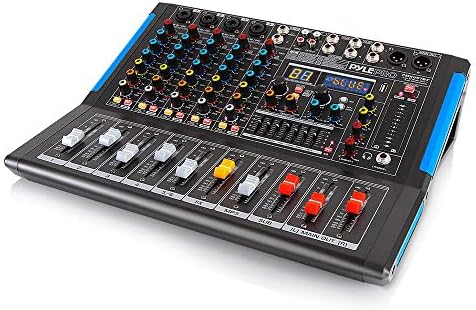
#1 – Pyle PMXU67BT 6-Channel Console Style Audio Mixer
Best for: hobbyists needing a budget-friendly sound board with Bluetooth streaming.
Why the Pyle PMXU67BT 6-Channel Console Style Audio Mixer is our #1 pick
- Listed at $109.99 in November 2026 – entry among those compared; the price moves, so check it
- 4.5 rating from 929 ratings
Number of Inputs: 6-Channel · Bit Depth: 16 bit
For comparison on number of inputs, pick #2 states 3 and pick #3 states 8.

#2 – Yamaha AG03
Best for: podcasters who need high-fidelity 24-bit recording and a loopback feature.
Why the Yamaha AG03 is our #2 pick
- Listed at $148.99 in November 2026 – mid-range among those compared; the price moves, so check it
- 4.4 rating from 507 ratings
Number of Inputs: 3 · Sampling Rate: 192 kHz
Against the other picks on number of inputs, pick #1 states 6-Channel and pick #3 states 8.
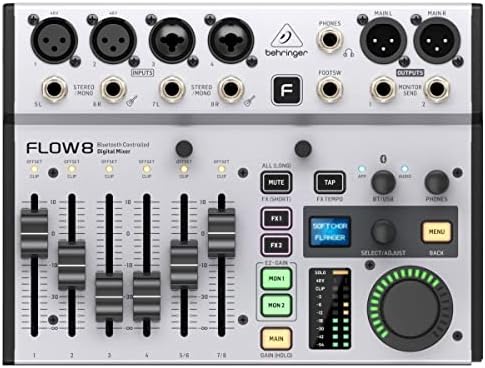
#3 – Behringer FLOW 8 Digital Mixer
Best for: beginners who need to run a podcast with 4 guests or remote-controlled mixing.
Why the Behringer FLOW 8 Digital Mixer is our #3 pick
- Listed at $179 in November 2026 – mid-range among those compared; the price moves, so check it
- 4.4 rating from 100 ratings
Number of Inputs: 8
To put that number of inputs in context, pick #1 states 6-Channel and pick #2 states 3.
You can also find our full review of the XENYX 1002 for more technical details.
How EB Servant picked: we started from the 200 most-reviewed mixing console listings in our retail dataset, removed duplicates, accessories, off-category products and 6 listings whose price did not fit their specifications, and 112 qualified. The picks on this page were selected from those 112 candidates against this topic’s requirements. The order of the picks reflects fit to this topic; each shows its rating and the number of ratings behind it, so you can weigh how much to trust it. Specifications come from manufacturer listings and ratings from verified Amazon buyer reviews (data checked November 2026).
What We Recommend and Why
A successful home setup depends on a mixer that can translate your raw inputs into a clean, balanced signal without overwhelming you with complex routing menus.
The Pyle PMXU67BT 6-Channel Console Style Audio Mixer achieves this by using a traditional analog interface that lets you focus on the sound rather than the software. You should consider the Yamaha AG03 if you require 24-bit resolution for professional-grade digital processing, or the Behringer FLOW 8 if you need to manage an 8-channel signal via a mobile app.
We selected these three models after screening 112 mixing consoles and comparing 10 options here at EB Servant. Our shortlist covers a range from $109.99 to $179, with the median price of the 10 products in our comparison being $162.49.
Explore the nuances of each model in the detailed reviews.
Find essential information regarding the setup and warranty notes.
Learn how to choose the right gear by visiting the buying guide.
What the Data Says About Mixing Consoles for Beginners
- Top pick: Pyle PMXU67BT 6-Channel Console Style Audio Mixer at $109.99 (Number of Inputs: 6-Channel).
- Also picked: Yamaha AG03 at $148.99; Behringer FLOW 8 Digital Mixer at $179.
- We compared 10 Mixing Consoles, from $104.68 to $250.74, median $162.49.
- Best buyer rating in the comparison: Yamaha MG10XU Analog Mixer at 4.6/5 from 182 ratings.
- Not covered by these picks: mix a live band with a full drum kit – it takes at least 16 to 24 count, and none of the picks reaches it. The Yamaha MGP24X Mixing Console, which we screened, does it at $674.99 (40 count, $565 more than our top pick).
- Cheapest in the comparison that can run a podcast with 4 guests: Depensheng DX12 12-Channel Studio Audio Mixer at $104.68 (12 count).
What to Look For in an Audio Mixer for Beginners
Choosing between analog and digital mixer layout designs
Choose between an analog mixer, which uses physical knobs for direct tactile control, or a digital mixer, which often uses a remote-controlled app or touchscreen to manage complex routing. For a beginner, the Pyle PMXU67BT 6-Channel Console Style Audio Mixer provides a traditional layout with rotary adjustment knobs and a 12-segment stereo output level meter to monitor signal levels. This physical interface differs from the Behringer FLOW 8 Digital Mixer, which utilizes a remote-controlled interface for operation. While the Yamaha CL/QL Series is the professional standard for large-scale touring and high-headroom processing, these entry-level options provide simpler workflows for home use. If you are unsure which to choose, count how many physical knobs you need to adjust simultaneously; a high number of physical controls favors the Pyle, while a preference for software-based adjustments favors the Behringer.
How physical knob accessibility provides tactile feedback for beginners
Prioritize a layout with dedicated rotary adjustment knobs if you prefer immediate, tactile feedback over menu-diving. The Pyle PMXU67BT 6-Channel Console Style Audio Mixer features independent channel balance and high/low frequency adjustment knobs for every channel. In contrast, the Behringer FLOW 8 Digital Mixer moves much of its control to a remote-controlled app. The Yamaha AG03 provides a compact 3-channel layout where space is at a premium. Beginners should check if they prefer to reach every adjustment by hand or via a screen; if you need to adjust multiple frequencies quickly during a live performance, the Pyle’s layout provides more immediate access than the remote-controlled options.
Built-in effects processing for reverb and delay on mixers
Look for a mixer that states it includes built-in effects to add reverb or delay without extra hardware. The Pyle PMXU67BT 6-Channel Console Style Audio Mixer states it has 16 DSP effects, while the Yamaha AG03 and Behringer FLOW 8 both state they include effect processing. These onboard options help create a fuller sound without requiring external pedals or processors. If you need specific “Amp Sim” processing for guitar, the Yamaha AG03 is the only option here that explicitly states this capability. For most beginners, having at least 10 effects is sufficient to start experimenting with different room sounds and vocal textures.
Selecting an input channel count for future growth
Select a mixer based on the number of signals you need to connect simultaneously, keeping in mind that more inputs allow for future growth. Beginners starting a podcast with 4 guests need at least 8 inputs to accommodate all microphones and devices; the Behringer FLOW 8 Digital Mixer meets this with 8 inputs. However, the Pyle PMXU67BT 6-Channel Console Style Audio Mixer provides 6 inputs, and the Yamaha AG03 provides 3 inputs. If you plan to expand your setup later, the Pyle or Behringer allows for more growth than the Yamaha. For a small band or podcast, determine the maximum number of people who will speak or play at once; if that number is 4 or more, you should look for a mixer with at least 8 inputs to avoid running out of connections.
How simple signal routing paths benefit beginner users
Weigh the complexity of signal routing against your technical comfort level, as beginners often benefit from simpler physical paths. The Pyle PMXU67BT 6-Channel Console Style Audio Mixer uses an analog control interface with 1/4 Send + Return inputs for easy effects routing. The Behringer FLOW 8 Digital Mixer offers a remote-controlled interface, which can simplify complex routing but requires navigating a digital menu. The Yamaha AG03 includes a loopback feature, which allows audio to be sent from the mixer’s outputs back into the computer’s input—a useful tool for streaming. To decide, identify if you need to route audio back into a computer; if so, the Yamaha AG03 is a strong candidate. If you prefer to route signals through physical cables and knobs, the Pyle’s analog interface is the more straightforward path.
View the specifications side by side in the comparison table.
Check the technical specifications in the requirements.
See our curated list of our top picks for quick browsing.
Consider viewing how the XR18 performs in a studio before making your final choice.
Sound Boards for Beginners Compared Side by Side
| Product | Price | Rating | Number of Inputs | Connectivity Type | Built-in Effects |
|---|---|---|---|---|---|
| Pyle PMXU67BT 6-Channel Console Style Audio Mixer | $109.99 | 4.5 (929 ratings) | 6-Channel | Bluetooth | Yes |
| Yamaha AG03 | $148.99 | 4.4 (507 ratings) | 3 | USB | Yes |
| Behringer FLOW 8 Digital Mixer | $179 | 4.4 (100 ratings) | 8 | Bluetooth | Not stated |
| Roland GOMIXER Audio Mixer | $175.99 | 4.1 (148 ratings) | Multiple inputs | Not stated | Not stated |
| XTUGA 12 Channel Audio Mixer | $104.68 | 4.2 (187 ratings) | 6/8/12/16 channel inputs | Bluetooth | Yes |
| Depensheng DX12 12-Channel Studio Audio Mixer | $104.68 | 4.3 (860 ratings) | 12-Channel | Bluetooth | Yes |
| Behringer XENYX 1002 | $139 | 4.3 (552 ratings) | 10 | auxiliary | Yes |
| Yamaha MG10XU Analog Mixer | $249.99 | 4.6 (182 ratings) | 10-Channel | USB | Yes |
| Mackie ProFX10 GO | $249.99 | 4.4 (401 ratings) | 10 | Bluetooth | Yes |
| Allen & Heath Allen & Heath ZEDi-10 Mixer | $250.74 | 4.4 (284 ratings) | 10 | USB | Not stated |
Prices are approximate and move frequently – check the current price before deciding. “Not stated” means the manufacturer listing does not give that figure – we do not estimate it.
Among our top picks, the value leader is Pyle PMXU67BT 6-Channel Console Style Audio Mixer because it provides the lowest cost per input channel.
The Full Review of Each Pick for Beginners
The 3 picks below are reviewed in the same order as the cards above.
Pyle PMXU67BT 6-Channel Console Style Audio Mixer
The Pyle PMXU67BT serves as a budget-friendly entry point for those starting with a simple home setup or a basic hobbyist music station. It provides a high volume of 929 ratings to support its position as a popular choice for those who need a physical sound board with immediate connectivity options.
What we like: This mixer includes 16 DSP effects and Bluetooth connectivity for wireless streaming. The 12-segment stereo output level meter provides visual level metering to help you see the signal strength as you adjust your mix. It also features 6 XLR Combo inputs, which allow you to connect a variety of microphones and instruments to the same port.
Keep in mind: With only 6 channels of input, this mixer is not enough to run a podcast with 4 guests or mix a live band with a full drum kit. It is best suited for solo performers or small home recording projects.
Yamaha AG03
The Yamaha AG03 is a specialized choice for beginners who need a high-fidelity audio path for live streaming or high-quality digital recording. It offers a 24-bit depth, which meets the standard minimum for professional-grade digital audio processing.
What we like: This 3-channel mixer provides a 192 kHz sampling rate, allowing for high-fidelity audio during live streams. It includes a loopback feature and 1-TOUCH COMP/EQ processing to simplify signal management for streamers. The device also includes a downloadable version of Cubase Al software for recording and MIDI sequencing.
Keep in mind: Because it only provides 3 inputs, you cannot use this model to host multiple guests or manage a full band. It is designed for a single creator who needs a high-quality interface for a computer or iPad.
Behringer FLOW 8 Digital Mixer
The Behringer FLOW 8 is the most capable option for beginners who need to manage more complex signals, such as running a podcast with 4 guests. It offers a higher input count than the other two picks to handle more simultaneous audio sources.
What we like: This mixer provides 8 inputs, which is the required amount to run a podcast with 4 guests. It features remote-controlled operation via an included app and Bluetooth connectivity for modern workflow flexibility. The 8-channel count allows for more versatile routing than the 3-channel or 6-channel alternatives.
Keep in mind: While it handles a podcast well, the 8-input limit means it still lacks the 16 to 24 inputs needed to mix a live band with a full drum kit.
Best value for a beginner who wants professional features?
The Yamaha AG03 offers the best value for professional features because it provides a 24-bit depth and a 192 kHz sampling rate, which are the standards for high-quality digital audio. While it has fewer inputs than the other models, these internal specs ensure that the audio captured is of a higher fidelity than what 16-bit systems can provide. For a beginner, this means the audio quality will remain clear and professional even as they move into more advanced recording projects.
The Jobs Buyers Ask About, Checked Against Each Pick
Each row is a job this page’s buyers ask about, worked out from each pick’s listed number of inputs and sampling rate and a typical need for the job.
| What you want to do | What it takes | How each pick does |
|---|---|---|
| Mix a live band with a full drum kit | at least 16 to 24 count | Pyle PMXU67BT 6-Channel Console Style Audio Mixer: no (6 count); Yamaha AG03: no (3 count); Behringer FLOW 8 Digital Mixer: no (8 count) |
| Run a podcast with 4 guests | at least 8 count | Pyle PMXU67BT 6-Channel Console Style Audio Mixer: no (6 count); Yamaha AG03: no (3 count); Behringer FLOW 8 Digital Mixer: yes (8 count) |
| Run a live stream with high-fidelity audio | at least 48 kHz | Pyle PMXU67BT 6-Channel Console Style Audio Mixer: not stated; Yamaha AG03: yes (192 kHz); Behringer FLOW 8 Digital Mixer: not stated |
The needs are typical figures for each job, not manufacturer claims, and each pick’s result is worked out from its listed specifications. Your own job’s figure is the one that decides.
Who Buys Mixing Consoles, and What It Really Costs
Who buys a mixing console, and what each one needs
- Podcast creators — enough input count to connect multiple microphones
- House worship leaders — 48V Phantom Power to run condenser microphones
- Live streamers — 24-bit / 48kHz resolution for clear digital audio
- Garage band hobbyists — enough inputs to avoid impedance mismatch (mismatched electrical resistance)
- Content creators — a digital interface to use software for mixing
What a sound board really costs, and where to buy one
What to budget for on top of the sound board
- XLR cables — to provide balanced connections for microphones
- Microphones — to provide the primary audio source for the console
- Studio monitors — to hear the mixed audio output
- Audio interfaces — if the console lacks direct computer connectivity
What you can leave out of the budget
- External power supplies — most beginner consoles include an internal power source
- High-end rack mounts — unnecessary for a desktop setup
Where this kind of product is normally sold
- Online marketplaces — offer competitive pricing and wide selection
- Music specialty stores — provide hands-on testing and expert advice
- General electronics retailers — offer convenient returns and standard warranties
Get answers to common queries in the FAQ.
Understand the boundaries of this guide in the scope.
What It Takes to Run One, and What to Verify
What you need before you start mixing
All three mixing consoles require a stable power source to operate before you can begin routing audio.
- The Yamaha AG03 requires a corded electric power source and connects to your computer via USB.
- The Pyle PMXU67BT 6-Channel Console Style Audio Mixer and the Behringer FLOW 8 Digital Mixer both include Bluetooth connectivity for wireless streaming.
- The Behringer FLOW 8 Digital Mixer provides enough inputs to run a podcast with 4 guests, whereas the Pyle PMXU67BT 6-Channel Console Style Audio Mixer and Yamaha AG03 do not provide the 8 inputs required for that specific setup.
Verifying your order upon arrival
Warranty coverage and return policies vary by seller and country, so confirm these details with your specific retailer before the return window closes.
- Check the physical condition of the rotary adjustment knobs and faders to ensure they move smoothly without resistance.
- Verify the number of XLR Combo inputs on the Pyle PMXU67BT 6-Channel Console Style Audio Mixer to confirm you have the 6 connections required for your microphones.
- Confirm the presence of the 12-segment stereo output level meter on the Pyle PMXU67BT 6-Channel Console Style Audio Mixer to ensure you can monitor signal levels.
- Ensure the Yamaha AG03 includes the 24-bit 192 kHz resolution hardware as stated, which allows for high-fidelity audio during live streams.
Plug the console into your power source and perform a basic volume test with a connected device on the day it arrives while a return is still possible.
Included software and recording requirements for specific mixers
The Yamaha AG03 includes a downloadable version of Cubase Al recording and midi-sequencing software, but the Pyle PMXU67BT 6-Channel Console Style Audio Mixer and Behringer FLOW 8 Digital Mixer do not state that they include specific software or plugins.
Setting up a workspace by connecting sources and adjusting faders
You place the console on a flat surface and connect your primary audio sources to the input channels. You then adjust the high and low frequency knobs to shape the sound before sliding the faders to balance the mix. Finally, you route the processed signal to your speakers or recording interface.
Mixing Consoles for Beginners: The Questions This Choice Raises
Which small recording console is best for a podcast with 4 guests?
The small recording console best for a podcast with 4 guests is the Behringer FLOW 8 Digital Mixer because it provides 8 inputs. You can connect four guests and still have remaining inputs for additional microphones or instruments, while the Pyle PMXU67BT 6-Channel Console Style Audio Mixer and Yamaha AG03 provide only 6 and 3 inputs, respectively.
Do I need to buy extra hardware like a dedicated interface or phantom power?
You may need extra hardware depending on whether your mixer includes a built-in USB interface or 48V phantom power, which provides the electricity needed for condenser microphones. The Yamaha AG03 and Behringer FLOW 8 both state USB connectivity for computer recording, while the Pyle PMXU67BT 6-Channel Console Style Audio Mixer includes 48V phantom power for your microphones.
How many channels can I run at once before the audio starts to degrade?
The number of channels you can run at once depends on the mixer’s input count, which determines how many individual audio signals the board handles simultaneously. The Behringer FLOW 8 Digital Mixer supports 8 channels, while the Pyle PMXU67BT 6-Channel Console Style Audio Mixer handles 6, and the Yamaha AG03 is limited to 3.
Which bluetooth mixing console is best for mobile use?
The bluetooth mixing console best for mobile use is either the Pyle PMXU67BT 6-Channel Console Style Audio Mixer or the Behringer FLOW 8 Digital Mixer, as both state Bluetooth connectivity. The Pyle PMXU67BT 6-Channel Console Style Audio Mixer weighs 4.22 pounds, while the Behringer FLOW 8 Digital Mixer weighs 3.94 pounds.
Identify your perfect match using the audience checklist.
Who Should Skip These Sound Boards
Choosing an entry-level mixing console involves balancing the number of inputs against your specific needs for recording or live performance. The Pyle PMXU67BT 6-Channel Console Style Audio Mixer provides 6 XLR Combo inputs, which allows you to connect six individual audio signals like microphones or instruments simultaneously. This count is sufficient for a small home setup, but it does not provide enough connections to mix a live band with a full drum kit, which typically requires at least 16 to 24 inputs.
To avoid input clipping—which occurs when gain staging is ignored, causing permanent harmonic distortion—you should monitor the 12-segment stereo output level meter on the Pyle PMXU67BT. This meter shows levels from -30 to +10, including a CLIP indicator to warn you when the signal exceeds the hardware’s limits. If you are recording a podcast with four guests, will 6 inputs provide enough room for your equipment? The Pyle PMXU67BT provides 6-channel mixing, which falls short of the 8 inputs required to host a four-guest podcast comfortably.
If you require a console capable of mixing a live band with a full drum kit, these three options will not meet your needs. These models provide between 3 and 8 inputs, while a full drum kit setup requires a minimum of 16 to 24 inputs to accommodate all individual components.