

Ebservant is reader-supported: some links on this page are affiliate links, and as an Amazon Associate Ebservant earns from qualifying purchases at no extra cost to you. Learn more.
Our Top 3 Mixing Tables
The best affordable Powered Mixer for Live music is the No Rockville RPM1470 Powered Mixer which provides 6000W peak power (750W RMS x 2 @ 4 Ohm) for those needing to power a large PA system.
Most Mixing Console options look identical on a listing page. These 3 are the ones that differ where it actually matters.
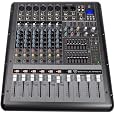
#1 – No Rockville RPM1470 Powered Mixer
Best for: powering a large PA system for a small venue
Why the No Rockville RPM1470 Powered Mixer is our #1 pick
- Listed at $399.95 in November 2026 – premium among those compared; the price moves, so check it
- 4.6 rating from 228 ratings
Number of Inputs: 14 · Power Output: 6000W peak power (750W RMS x 2 @ 4 Ohm)
Against the other picks on number of inputs, pick #2 states 10 and pick #3 states 4.

#2 – Peavey PVi 6500 Powered Mixer
Best for: users requiring a durable stainless steel build with a feedback locating system
Why the Peavey PVi 6500 Powered Mixer is our #2 pick
- Listed at $299.99 in November 2026 – mid-range among those compared; the price moves, so check it
- 4.5 rating from 104 ratings
Number of Inputs: 10 · Power Output: 400
To put that number of inputs in context, pick #1 states 14 and pick #3 states 4.

#3 – No Rockville RPM45 1800w 4 Channel Mixer Amplifier
Best for: entry-level setups needing high power output on a tight budget
Why the No Rockville RPM45 1800w 4 Channel Mixer Amplifier is our #3 pick
- Listed at $134.95 in November 2026 – entry among those compared; the price moves, so check it
- 4.4 rating from 1,320 ratings
Number of Inputs: 4 · Power Output: 1800w
For comparison on number of inputs, pick #1 states 14 and pick #2 states 10.
For a deep dive into the digital features, look at our full breakdown of the XR18.
How EB Servant picked: we started from the 200 most-reviewed mixing console listings in our retail dataset, removed duplicates, accessories, off-category products and 6 listings whose price did not fit their specifications, and 112 qualified. The picks on this page were selected from those 112 candidates against this topic’s requirements. The order of the picks reflects fit to this topic; each shows its rating and the number of ratings behind it, so you can weigh how much to trust it. Specifications come from manufacturer listings and ratings from verified Amazon buyer reviews (data checked November 2026).
The Verdict, and the Basis for It
Clear, high-fidelity audio in a live setting requires a mixer that can maintain 24-bit depth to ensure every nuance of the performance is captured digitally. The No Rockville RPM1470 Powered Mixer achieves this professional standard while providing massive power headroom. For users who prefer a more compact form factor for small rehearsals, the Peavey PVi 6500 Powered Mixer is a strong contender, whereas the No Rockville RPM45 1800w 4 Channel Mixer Amplifier is the ideal choice for basic, multi-channel needs.
We selected these three options after screening 112 mixing consoles at EB Servant. These models offer a clear progression of performance and price, with the three picks priced between $134.95 and $399.95.
The median price of the 9 products in our comparison is $199.95.
Use the audience checklist to find the perfect match based on your specific role or experience level.
See our top picks for a ranked list of the best budget options available right now.
Follow the buying guide to learn which features matter most when shopping for your first console.
What the Data Says About Sound Boards
- Top pick: No Rockville RPM1470 Powered Mixer at $399.95 (Number of Inputs: 14).
- Also picked: Peavey PVi 6500 Powered Mixer at $299.99; No Rockville RPM45 1800w 4 Channel Mixer Amplifier at $134.95.
- We compared 9 Mixing Consoles, from $109.99 to $549, median $199.95.
- Best buyer rating in the comparison: No Rockville RPM1470 Powered Mixer at 4.6/5 from 228 ratings.
Mixing Consoles: Price, Rating and Specs Compared
| Product | Price | Rating | Number of Inputs | Power Output | Built-in Effects |
|---|---|---|---|---|---|
| No Rockville RPM1470 Powered Mixer | $399.95 | 4.6 (228 ratings) | 14 | 6000W peak power (750W RMS x 2 @ 4 Ohm) | Yes |
| Peavey PVi 6500 Powered Mixer | $299.99 | 4.5 (104 ratings) | 10 | 400 | Yes |
| No Rockville RPM45 1800w 4 Channel Mixer Amplifier | $134.95 | 4.4 (1,320 ratings) | 4 | 1800w | Yes |
| Rockville RPM80BT 2400w 8 Channel Mixer Amplifier | $199.95 | 4.5 (414 ratings) | 8 | 2400w | Yes |
| Rockville RPM85 Powered Mixer | $179.95 | 4.2 (307 ratings) | 8 | 2400W | Yes |
| Behringer EUROPWER PMP1680S Powered Mixer | $349.95 | 4.3 (158 ratings) | 10-Channel | 1050 watts | Yes |
| Behringer Europower PMP4000 Powered Mixer | $549 | 4.4 (211 ratings) | 16 Channels | 1050 watts | Yes |
| Rockville RPM45BT Powered Mixer | $134.95 | 4.4 (366 ratings) | 4 | 1800W | Yes |
| Kaschun 4-Channel Stereo Audio Mixer | $109.99 | 4.2 (112 ratings) | 4 | 250Wx2 | Yes |
Prices are approximate and move frequently – check the current price before deciding. “Not stated” means the manufacturer listing does not give that figure – we do not estimate it.
Among our top picks, the value leader is No Rockville RPM1470 Powered Mixer because it provides the highest input count for the lowest cost per channel.
Each Sound Board We Picked, Reviewed
The 3 picks below are reviewed in the same order as the cards above.
No Rockville RPM1470 Powered Mixer
The No Rockville RPM1470 serves as the high-performance flagship for this selection because it provides the highest power output and input capacity available among the options we compared.
What we like: This mixer provides 6000W peak power, which is enough to power a large PA system for a small venue. It features 14 inputs and a 24-bit digital effects processor, which meets the standard minimum for professional-grade digital audio processing.
Keep in mind: The 28.8-pound weight makes it less portable for users who need to move the unit frequently between different locations.
Peavey PVi 6500 Powered Mixer
The Peavey PVi 6500 represents the mid-range standard for this list, offering a balance of features like the FLS Feedback Locating System and stainless steel construction.
What we like: This model includes a combination XLR and 1/4 input jack and a 4.5 rating from 104 buyers. The 400W output power provides enough headroom—the amount of volume reached before distortion—for smaller setups.
Keep in mind: With a 400W output, this mixer does not have enough power to drive a large PA system for a small venue.
No Rockville RPM45 1800w 4 Channel Mixer Amplifier
The No Rockville RPM45 is the entry-level budget option, providing a compact footprint for those who need a simple, affordable soundboard.
What we like: This mixer delivers 1800W of power, which is enough to power a large PA system for a small venue. It includes 4 balanced XLR inputs and 4 1/4 TRS inputs for versatile connectivity.
Keep in mind: The 4-input limit means you should check your total signal count before ordering to ensure it accommodates every instrument and microphone in your setup.
Which model gives me the best “bang for my buck” for a small church or band?
The No Rockville RPM45 1800w 4 Channel Mixer Amplifier provides the best value for a small church or band by offering 1800W of power for approximately $134.95. While the No Rockville RPM1470 offers more inputs and higher peak power, the RPM45 provides the necessary wattage to power a large PA system for a small venue at a lower price point.
You can also find a detailed review of the AMX7333 Mixer to see its specific capabilities.
What Matters Most in a Mixing Console
Total Wattage Output
Select a mixer with enough wattage to drive your speakers without distortion, such as the 6000W peak power of the No Rockville RPM1470 Powered Mixer or the 1800w from the No Rockville RPM45 1800w 4 Channel Mixer Amplifier. If you need to power a large PA system for a small venue, you need at least 500 to 1,000 Watts; both of these models provide sufficient power for that task. The Peavey PVi 6500 Powered Mixer states 400 Watts, which is not enough for a large PA system. Choosing a lower wattage than your venue requires is like trying to power a house with a single AA battery; it simply cannot provide the necessary energy to move the air. While the Yamaha CL/QL Series is the professional standard for large-scale touring and high-headroom processing, these budget options provide the raw wattage needed for smaller, local setups.
Choosing a mixing console with enough channels for your gear
Determine how many channels you need by counting your microphones, instruments, and playback devices, then choose a mixer that provides a few extra slots for growth. If you are just starting out, 4 channels are often sufficient for a small band, though the No Rockville RPM45 1800w 4 Channel Mixer Amplifier offers this entry point. For more complex setups, the Peavey PVi 6500 Powered Mixer provides 10 inputs, while the No Rockville RPM1470 Powered Mixer provides 14. Having extra channels prevents you from having to run multiple mixers or compromise on your signal chain. These options provide a more accessible workflow than the Allen & Heath SQ Series, which is the industry benchmark for mid-range digital mixing workflows.
Using built-in effects to simplify the signal chain on a mixer
Look for a mixer that includes built-in effects to handle reverb and delay without needing external hardware. Every mixer in our comparison states it includes built-in effects, which helps maintain a clean signal path and reduces the complexity of your signal chain. These effects are processed through the mixer’s internal hardware, allowing you to apply spatial depth to vocals or instruments. Because these are integrated, you avoid the need for external processors that could introduce extra points of failure or signal degradation.
Prioritizing specific input connections on a mixing console
Prioritize the types of connections you need, such as XLR for microphones or 1/4″ jacks for instruments, to ensure your gear plugs in directly. The No Rockville RPM1470 Powered Mixer features 14 XDR2 low-noise, low-distortion mic preamps, which are the sections of the mixer that provide the initial gain for your microphones. The Peavey PVi 6500 Powered Mixer and the No Rockville RPM45 1800w 4 Channel Mixer Amplifier both state they include USB connectivity for digital playback. You should check if your specific instruments use balanced or unbalanced cables to ensure the input types match your hardware. These units provide a more straightforward physical interface than the software-heavy workflows found in higher-tier professional consoles.
Weighing a mixing console for ease of transport and portability
Weigh the weight of the mixer against your transport method, choosing a lighter unit if you must carry it over long distances. The No Rockville RPM45 1800w 4 Channel Mixer Amplifier weighs 19 pounds, making it the most portable option here. The Peavey PVi 6500 Powered Mixer weighs 23.6 pounds, while the No Rockville RPM1470 Powered Mixer is the heaviest at 28.8 pounds. If you are frequently moving gear between venues, a lighter weight reduces physical strain during load-in. While heavier units often offer more power, the 19-pound weight of the RPM45 makes it a practical choice for mobile setups.
Find answers to common questions in the FAQ section.
Compare every model side-by-side in the comparison table to see the technical differences at a glance.
Review the setup and warranty notes for information on installation, power needs, and manufacturer support.
What Each Job Calls For vs What These Picks State
Match the job you actually need done to the figure it calls for, then check which picks state that figure or more. Where none do, the row says so.
| What you want to do | The figure it calls for | Picks at or above it |
|---|---|---|
| Power a small PA system for a local venue | 500 Watts | RPM1470, RPM45 |
| Power a large PA system for a small venue | 1,000 Watts | RPM1470, RPM45 |
| Connect a large number of microphones for a live band | 14 inputs | RPM1470 |
These figures are the levels this category is generally held to, not manufacturer claims. A pick at or above a figure states that number; how it reaches it and the rest of your setup still decide the job, so check them against your own workload before buying.
Who Buys Sound Boards, and What It Really Costs
Who buys a mixing table, and what each one needs
- House worship leaders — enough input count to connect a full band
- Garage band members — XLR connectivity for balanced signals to reduce noise
- Community theater volunteers — 48V Phantom Power to run condenser microphones
- Mobile DJ hobbyists — an analog interface for physical fader control
- Podcasters — 24-bit / 48kHz resolution for standard digital audio quality
What a mixing console really costs, and where to buy one
What to budget for on top of the mixing console
- Microphones — to capture sound for the mixer inputs
- Cables — to connect instruments and mics to the console
- Speaker stands — to position the powered outputs safely
- Power conditioners — to provide stable electricity and protect equipment
What you can leave out of the budget
- External power amplifiers — the mixer already has built-in power output
- Dedicated audio interfaces — the mixer handles the signal conversion internally
Where this kind of product is normally sold
- Musical instrument retailers — offer hands-on testing and specialized technical support
- Online marketplaces — provide competitive pricing and easy comparison of input counts
- Pro audio specialty stores — provide expert advice on avoiding impedance mismatch (signal loss from wrong connections)
View the article scope to see which specific mixers and price points are included in this guide.
Check the minimum requirements to ensure these consoles meet your specific technical needs.
Explore the detailed reviews for an in-depth look at every mixer featured in this roundup.
If you need wireless connectivity, see our comparison of mobile bluetooth audio mixers.
Before the First Use, and After Delivery
Cables and Stands for Setup
You need XLR cables for balanced connectivity for microphones, TRS cables for balanced connectivity for instruments and line signals, and microphone stands to position your inputs for live sound.
The No Rockville RPM1470 Powered Mixer provides 14 inputs, which may require a larger quantity of XLR cables than the 4 inputs on the No Rockville RPM45 1800w 4 Channel Mixer Amplifier.
The Peavey PVi 6500 Powered Mixer includes a combination XLR and 1/4 input jack to accommodate different connector types.
Power and connection requirements for the three mixing consoles
All three mixing consoles require a corded electric power source to operate.
- The No Rockville RPM1470 Powered Mixer includes Bluetooth hardware for wireless streaming.
- The Peavey PVi 6500 Powered Mixer and No Rockville RPM45 1800w 4 Channel Mixer Amplifier include USB functionality for playback or recording.
- The No Rockville RPM45 1800w 4 Channel Mixer Amplifier provides +15V phantom power, which provides power to condenser microphones.
Verifying the purchase and input count of the mixing console
Warranty coverage and return policies differ by seller and country.
- Verify the number of inputs matches your planned setup, as the No Rockville RPM1470 Powered Mixer provides 14 inputs while the No Rockville RPM45 1800w 4 Channel Mixer Amplifier provides 4.
- Confirm the power output meets your venue needs; the No Rockville RPM1470 Powered Mixer provides 6000W peak power, whereas the Peavey PVi 6500 Powered Mixer provides 400W.
- Check that the 24-bit depth on the No Rockville RPM1470 Powered Mixer meets your requirements for digital audio processing.
- Inspect the chassis for any shipping damage to the knobs or ports, as these are difficult to repair on integrated mixing tables.
Plug the unit into a power source and perform a test mix with your primary inputs to confirm signal levels before your first live event.
Consider viewing the full spec analysis for the AMX7332 Mixer to see how it handles smaller setups.
Questions Buyers Ask Before Choosing Mixing Tables
How does a powered mixer differ from a standard mixer?
A powered mixer includes a built-in amplifier to drive speakers directly, whereas a standard mixer requires external power amplifiers to reach high volumes. The No Rockville RPM1470 Powered Mixer and the Peavey PVi 6500 Powered Mixer both include these internal amplifiers to simplify your signal chain by reducing the number of cables and devices needed on stage.
Is there a hidden cost for adding more inputs or effects later?
The hardware capacity for inputs and effects is fixed by the physical circuitry of the mixing console, meaning you cannot add more channels or internal effects without replacing the unit. If you need more than the 14 inputs on the No Rockville RPM1470 or the 4 inputs on the No Rockville RPM45 1800w 4 Channel Mixer Amplifier, you would need to purchase a larger mixing table.
Which powered mixer is best for a small venue?
The best powered mixer for a small venue depends on your specific wattage requirements for the space. The No Rockville RPM1470 Powered Mixer provides 6000W peak power, which is enough to power a large PA system for a small venue, while the Peavey PVi 6500 Powered Mixer provides 400W of output power, which is not enough for that specific job.
Does the No Rockville RPM45 1800w 4 Channel Mixer Amplifier support large PA systems?
Yes, the No Rockville RPM45 1800w 4 Channel Mixer Amplifier supports large PA systems because it provides 1800W of power output. This allows it to drive significant speaker loads in a small venue where a 500 to 1,000 Watt requirement is common.
Who Should Skip These Mixing Consoles
Choosing a budget powered mixer involves balancing the number of inputs you need with the power output required for your venue. If you are planning a live performance for a small venue, you need at least 500 to 1,000 Watts of power output. The No Rockville RPM1470 Powered Mixer provides 6000W peak power (750W RMS x 2 @ 4 Ohm), which is sufficient for a large PA system. The No Rockville RPM45 1800w 4 Channel Mixer Amplifier provides 1800W of peak power, which also meets that requirement. The Peavey PVi 6500 Powered Mixer provides 400 Watts of output power, which is not enough to power a large PA system for a small venue.
Input clipping is a way a purchase fails if gain staging is ignored, as it causes permanent harmonic distortion. To avoid this, you must monitor your signal levels to ensure they do not exceed the mixer’s limits. Feedback loops also occur if the mix output feeds back into the input chain without proper gating or EQ. You can prevent this by checking your signal path and using the built-in effects or EQ controls to manage frequencies.
The No Rockville RPM1470 Powered Mixer features a 24-Bit bit depth, which measures the amount of information available to describe the amplitude of each sample. This matches the 24-bit / 48kHz Resolution standard used for professional-grade digital audio processing. The Peavey PVi 6500 Powered Mixer and No Rockville RPM45 1800w 4 Channel Mixer Amplifier do not state a bit depth in their specifications.